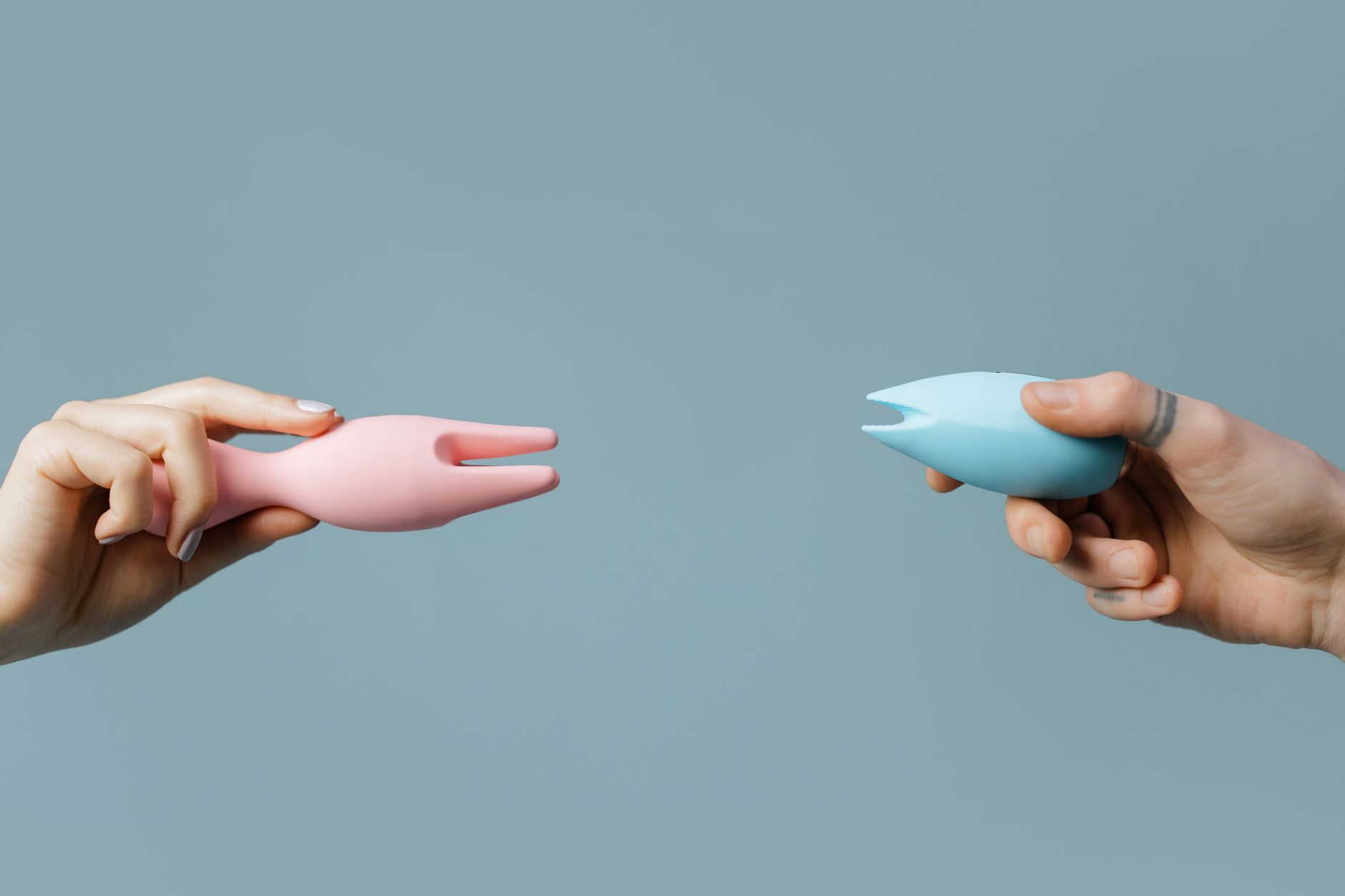
Let's talk about the elephant in the bed
Years without regular sex doesn't mean your body stops working. It means your body recalibrates. When touch becomes rare, the neural pathways that light up during pleasure don't disappear. They go dormant. And when you come back to this after months or years, sensation doesn't feel like it did before. It feels sharper, sometimes overwhelming, sometimes almost numb. Both at once.
Most couples don't talk about this. They just awkwardly try to pick up where they left off and then feel confused or frustrated when the experience doesn't match their memory.
What actually happens in your nervous system
Your sexual response isn't purely physiological. It's deeply neurological. When you haven't had regular sexual touch for an extended period, your body's sensitivity map shifts. The clitoris, which has over 8,000 nerve endings, doesn't lose them. But the brain's readiness to receive those signals? That gets rusty.
There's also a psychological layer. After a long break, your mind might be running in the background wondering if this is weird, if your partner is judging you, if you're doing it right. That mental static absolutely dampens physical sensation.
Add to that the fact that desire itself might feel unfamiliar. Your body might not be sending its usual "I want this" signals. This is wildly common and completely fixable. But you have to understand it's happening before you can work with it.
Why lemon clitoral vibrators change the game right now
When you've been away from pleasure for a long time, you need a bridge. Something that doesn't require you to generate arousal from scratch. Lemon vibrators work as this bridge for a specific reason: they deliver consistent, targeted sensation without requiring your brain to do heavy lifting.
The air-suction technology of a lemon vibrator mimics something closer to what your body naturally produces, but in a concentrated, sustained way. After years of no touch, your clitoris often needs this kind of reintroduction. Not because something's broken, but because sensation works like a muscle. You're essentially doing physical therapy for your pleasure response.
With a traditional vibrator, you might be dealing with intensity that feels too sharp or too dull, depending on where you're at. A lemon clitoral vibrator lets you start gentle and build incrementally.
The couples-specific difference you'll notice
Here's what I see in my practice with partners reconnecting after years of infrequent or absent sex:
First, the sensation itself feels different for the receiving partner. They often describe it as "waking up." It's not painful, but it's pronounced. Starting with a lem vibrator on the lowest setting lets you ease back into that sensation without shock.
Second, there's a consent and control piece that matters more than people realize. When you're using a toy together, both partners can stay focused on pleasure rather than performance anxiety. The partner holding the toy has agency. The receiving partner can ask for changes in real time.
Third, lemon vibrators remove a particular pressure that kills intimacy after a long break. If penetrative sex hasn't happened in years, there's sometimes an unspoken expectation that it should happen now. A lemon clitoral vibrator lets you explore sensation and connection without that narrative hanging overhead.
Timing and readiness after a long pause
Honestly, you might be surprised how your body responds once you create space for pleasure again. But there's a practical rhythm to this.
Don't rush the warm-up. After years away, fifteen to twenty minutes of touch, conversation, and gentle sensation-building pays off in ways it might not have before. Your nervous system needs time to shift from "safe" mode into "receptive" mode.
Start with the gentlest setting on your lemon vibrator. Seriously. I know this sounds obvious, but most people skip this step and then wonder why the sensation feels jarring. You're recalibrating.
Use lube, even if you think you don't need it. Tissue can feel tender after extended periods without stimulation. Water-based lube makes everything more comfortable and lets you focus on sensation rather than friction.
Talk between attempts. Not a clinical debrief, but actual conversation about what felt good, what felt strange, what you want to try differently next time. This is how you rebuild the feedback loop that makes partnered pleasure work.
The mind piece matters as much as the body
After a long break, your brain might be running old scripts. "I'm not sexy anymore." "My partner doesn't find me attractive." "This is going to be awkward." None of those thoughts make your clitoris work better.
One thing I recommend to partners: frame this as exploration rather than "getting back to normal." Normal was years ago. This is new. You're both different people now. A lemon clitoral vibrator is a tool for that exploration, not a way to recreate something lost.
I also see real value in one partner exploring alone first. If you've been away from pleasure for years, spending thirty minutes with yourself, a vibrator, and no pressure to perform or connect can help you remember what sensation feels like in your own body. That solo reconnection often makes partnered exploration less fraught.
When physical differences show up
Sometimes, after years without regular sex, the receiving partner discovers that their body feels physically different. Pelvic floor tightness is real and common. The opening might feel more narrow or tender. Arousal might take longer to build, or lubricant might be less plentiful.
None of this means you're broken or that you can't have pleasure. It means you're working with an adjustment period. A lemon vibrator helps because it doesn't require as much active arousal to feel good. You're literally stimulating nerve endings, not waiting for a cascade of physiological responses.
If penetration feels uncomfortable and you're not sure why, this is worth discussing with a healthcare provider. But in most cases, the solution is patience, lube, and time. A lemon clitoral vibrator can be part of rebuilding comfort.
Building back in incrementally
Think of this in phases. Phase one is solo exploration. You reacquaint yourself with sensation in your own body, on your own timeline, with zero pressure. A lemon vibrator at setting one or two, maybe ten minutes. See what you notice.
Phase two is partnered but not coupled. You're in the same room, you're touching, you're using the vibrator together, but the goal isn't anything beyond sensation. You're not aiming for anything. Just noticing what feels good.
Phase three is when you layer in desire, if it's there. Sometimes it will be. Sometimes it won't. Both are information. But after a long break, desire often returns when you make space for pleasure. Not the other way around.
After you've reconnected with pleasure over weeks or a couple of months, you might notice that other forms of intimacy feel less loaded. Your partner might feel like less of a stranger. Sex might feel like something you both want rather than something you're supposed to want.
I also want to name something: this whole process is a gift, even though it doesn't feel like it while you're living it. How Lemon Vibrators Help When You Want to Explore Partnered Pleasure After Years Solo covers more on this angle. The fact that you're both willing to show up and rebuild pleasure together is significant. It means you care about this connection enough to do the unglamorous work.
Frequently asked questions
How long does it usually take for sensation to return to normal after years of infrequent sex?
There's no fixed timeline, but most couples I work with notice meaningful shifts in sensation and desire within four to eight weeks of consistent gentle exploration. Some notice changes within days. The brain's neuroplasticity works in your favor here. The more you practice pleasure, the more readily your nervous system responds. That said, "normal" isn't the goal. You're building something new that fits who you both are now.
Is it normal to feel emotional when you start exploring pleasure again with your partner?
Completely normal. After years of distance, reconnecting sexually is reconnecting emotionally. You might feel vulnerable, seen, relieved, or sad all at once. This is your nervous system processing a big shift. Give yourself permission to feel whatever comes up. Talk about it with your partner if you can. Emotions are data.
Should we use a lemon clitoral vibrator before trying any other form of sex?
There's no rule, but it often helps. A lemon vibrator focuses on clitoral pleasure specifically, which means less pressure on other forms of intimacy and more chance of experiencing pleasure early. That positive feedback loop can make partnered exploration feel safer and more connected. Whether it leads to other forms of sex is up to you both.
My partner is uncomfortable with using any kind of toy. Should we push forward?
Not yet. Discomfort often comes from myths about what toys mean or assumptions about pleasure and partnership. Conversations about this work better than pushing. Sometimes watching content together, reading articles, or talking with a therapist helps partners feel safer. Once the resistance shifts, toys like lemon vibrators can feel collaborative rather than threatening.
What if I don't experience sensation or pleasure even with a lemon vibrator after a long break?
Give it time. A few things might be happening: your body might need more time to recalibrate, your mind might still be holding protective tension, or there might be medical factors worth checking with a doctor. But absent those, consistent gentle exploration often works. The nervous system learns. You're essentially teaching your body that pleasure is safe again.
Can lemon clitoral vibrators help if the receiving partner has body image anxiety about reconnecting?
Absolutely. One partner once told me that using a vibrator shifted her focus from "Does my partner find me attractive?" to "What does this feel like?" It moved the conversation from judgment to sensation. When you're focused on physical feeling rather than being looked at, body image anxiety often quiets down. That's not magic. It's just permission to focus inward.
Here's what actually happens next
You're not starting from zero, even though it might feel that way. Your body remembers pleasure. Your neural pathways remember desire. Your relationship remembers intimacy. All of that's still there. It's just quieter.
A lemon vibrator is one tool for turning up the volume. It gives you a way to explore sensation without pressure, to rebuild connection without performance anxiety, and to remember that pleasure is available to both of you right now, not lost in the past.
The couples who do this well tend to share one thing: they treat it as an experiment rather than a test. They're curious instead of afraid. That mindset changes everything. If you'd like to talk through your specific situation, reach out. That's what I'm here for.