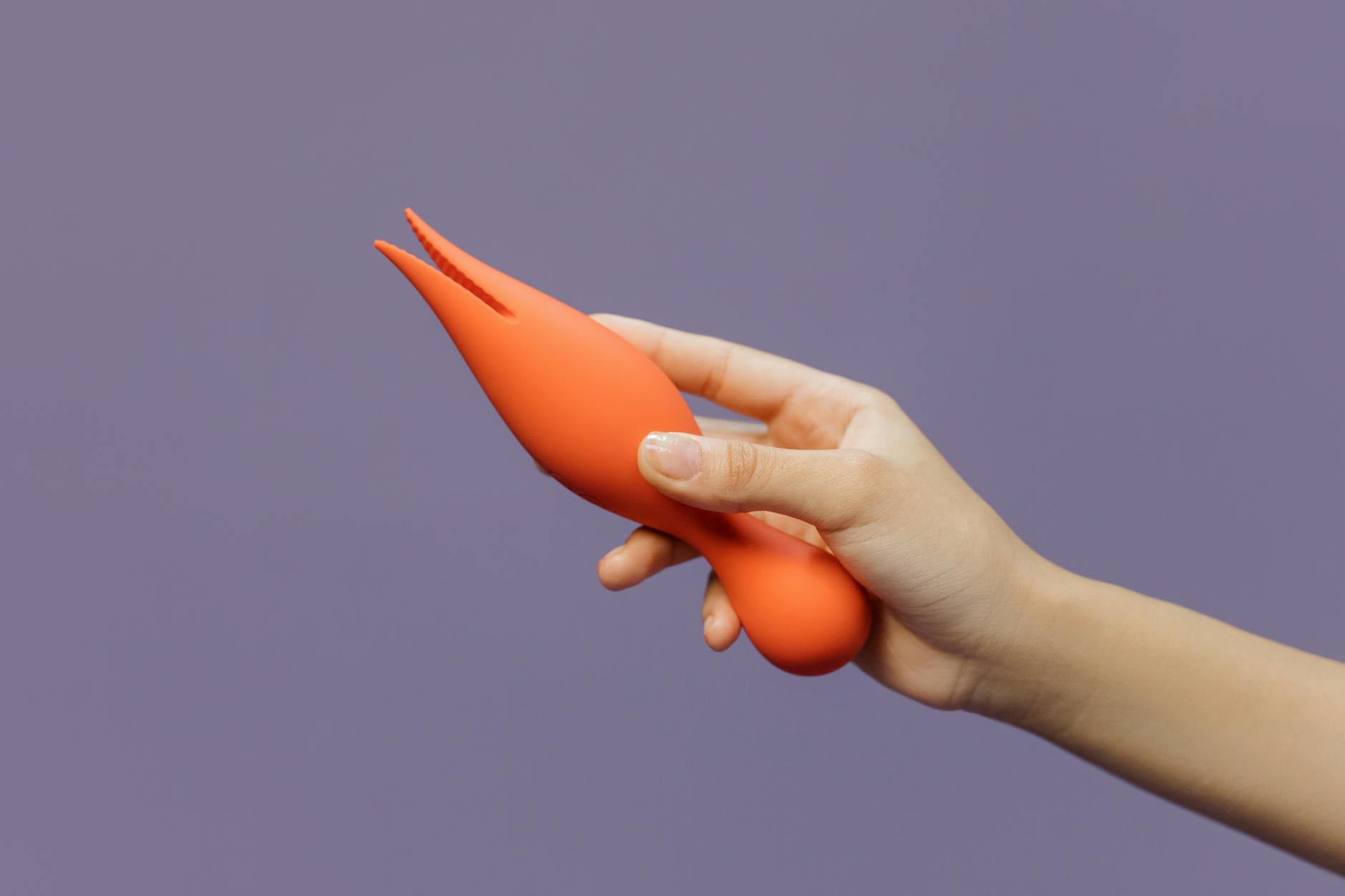
Here's what nobody tells you about coming back
Years of solo pleasure rewire you. Not in a bad way. In a way that's honest, clear, and deeply attuned to what your body actually wants. Then you meet someone (or reconnect with someone), and suddenly there's another person in the room with their own timing, their own expectations, and their own learning curve about you. That's the friction point, not the lemon vibrator.
Let me be direct: partnered sex after extended solo exploration often feels like learning a foreign language. Your body knows what it likes. Your partner doesn't yet. And introducing a lemon vibrator into that gap often feels like admitting something's broken. It's not. It's actually the most efficient bridge between two very different bodies.
Why your solo rhythm doesn't automatically translate
When you've spent months or years with a partner who knows exactly how to touch you.the way you like it.you've built a feedback loop. You know the pressure, the speed, the angle. You've optimized for your nervous system. A new partner (or a partner you're reconnecting with) is starting from zero.
There's also the psychological piece. Solo, there's no performance pressure. No one's waiting for you to finish. No one's reading your face for signs of whether they're doing it right. That safety net disappears. Many people find their arousal literally doesn't build the same way without it.
A lemon clitoral vibrator handles both problems at once. It removes the pressure for your partner to be a mind reader, and it gives you direct control over sensation at the exact moment you need it. You're not compensating for a broken dynamic. You're building a shared one.
The consent conversation actually matters here
I spent fifteen years watching couples struggle with "I want to bring a toy into this." The failure point was almost never the toy. It was the conversation. Someone would mention it casually during sex (worst timing), or drop a hint that landed like criticism ("I need more to finish"), or worse, just order one and leave it on the nightstand.
The conversation that works goes like this. Not this week. Not when you're about to be intimate. Neutral time, neutral place. "I've been exploring what I like on my own, and I found something that helps me get there faster. I want to bring that into what we do together, not instead of what we do, but alongside it. Here's what I'm thinking."
Note what's there: you're naming your pleasure (not his failure), you're being specific (toy name, what it does), and you're framing it as additive. Not a critique. Not a replacement.
Most partners, when they hear that framing, actually feel relieved. The pressure to be a clitoral vibrator with a human body just lifted. They can focus on kissing you, touching other parts of you, being present. The lemon vibrator handles one job. They handle the rest.
How lemon suction toys actually change the dynamic
Traditional vibrators are buzzy and direct. They work, and many people love them. But they require continuous friction that can feel intense, especially if you've been solo and know exactly how sensitive you are.
Lemon vibrators (and similar air-suction lemon adult toys) work differently. The suction stimulates the clitoral network of nerves without the grinding sensation. For partnered sex, this matters because you get sensation and pleasure without losing the ability to feel your partner's touch elsewhere on your body. You're not numb from a vibrator that's demanding all your attention. You can feel his hands on your thighs, his mouth on your neck, his presence. That's the magic.
The lem vibrator is also smaller and quieter than traditional clitoral vibrators. Which sounds trivial until you realize that "the toy is loud" or "the toy is obvious" creates a self-consciousness in couples who are already nervous about the transition. A quieter, more discreet lemon clitoral vibrator? That's one fewer thing to feel awkward about.
The actual timeline for rebuilding mutual pleasure
Expect three phases.
Phase One: Solo exploration with the toy (weeks 1-2). You use the lemon vibrator on your own first. You figure out what setting, what angle, how long. You get comfortable with it. You're not learning the toy while your partner's watching and wondering if he's doing something wrong.
Phase Two: Introduction during partnered sex (weeks 3-4). You bring it in, maybe during foreplay. He's still involved. You're guiding where the toy goes, what speed you're using. He's doing other things. This is still collaborative, not spectator mode.
Phase Three: Integration (month 2+). It just becomes part of your toolkit. Sometimes you use it, sometimes you don't. Sometimes he operates it, sometimes you do. It's not a big deal anymore. It's just what works.
This timeline is just a framework. Some couples move faster. Some take longer. The point is there's no rushing it. And there's definitely no "well, if the toy doesn't immediately make things better, we should abandon it." Pleasure isn't a binary. It builds.
What to actually say if he seems hesitant
Here's what I hear from partners who are nervous: "Does this mean I'm not enough?" or "Are you bored?" or (less often but it happens) "That's emasculating."
The response that works: "I've been learning what my body responds to. Some of that I can do alone, some of it we can do together, and some of it a tool helps with. None of that is about you not being enough. You're the person I want to explore this with. The toy is just a tool, like lube or a pillow under my hips. It helps us both feel better."
There's a small subset of men who remain uncomfortable, and that's a real conversation to have. But most hesitation melts when they realize you're not comparing them to the toy. You're asking them to explore your pleasure together, and the toy is just making that easier.
The couples I've worked with who integrated lemon clitoral vibrators into partnered sex actually reported deeper communication overall. Because you had to talk about what you like. You had to practice saying "faster" or "gentler." You had to ask for feedback. Those skills transfer to everything. That's not a toy thing. That's an intimacy thing.
When to use it, when to skip it
You don't need a lemon vibrator every time. Some nights, you'll want the full old-school experience. Some nights, you'll want the toy because it gets you there faster and you're both tired. Some nights, you'll start without it and add it halfway through.
The goal is never "use the toy so everything works perfectly." The goal is "expand the toolkit so you both feel good." Sometimes that means the lem vibrator. Sometimes it means more time. Sometimes it means a different angle or more lube or his hand exactly where it was before you ever bought a toy.
What matters is that you're not using it to paper over communication gaps. "I'll just use the toy because I don't want to tell him I need more time" is a dead end. But "I'm bringing this toy because I know what I like and I want to share that with you" is a beginning.
FAQ: Lemon Vibrators and Partnered Transition
Will a lemon vibrator make me less interested in partnered sex?
No. If anything, the opposite. When your pleasure actually happens, you associate partnered sex with feeling good, which makes you want more of it. The couples I've worked with who introduced lemon sexual toys reported higher desire overall, not lower. The toy isn't competing with your partner. It's helping you show up for partnered sex feeling satisfied, not frustrated.
How do I know if he's actually okay with the lemon vibrator or just saying yes?
Watch his behavior, not just his words. Is he curious about settings? Does he ask questions? Does he touch you while the toy's being used, or is he completely checked out? A genuinely okay partner gets involved. He might be curious, amused, or just present. He's not distant or quiet or suddenly on his phone. If something feels off, ask directly. "I want to make sure you're actually into this." Honesty here is better than a yes that doesn't mean yes.
Can we use the lemon vibrator on me during partnered sex, or is that weird?
It's not weird at all. This is actually phase two, and it's totally normal. You're using the lemon clitoral vibrator during intercourse or oral sex or whatever you're doing. Some positions work better than others. Angles matter. It takes trial and error. That's fine. That's the exploration. The fact that you're figuring this out together is the whole point.
What if the lemon vibrator makes me finish too fast and he hasn't finished yet?
Then you finish, and then he finishes. Or you finish, and then you both take a break and come back. Or you use the toy, you get close, and then he does something different and you finish together. Or he knows he's faster, so he starts with the toy getting you there while he's working on himself. There are about eight solutions to this problem, and none of them involve "just don't use the toy." Talk about what happens after. Make a plan. Then adjust the plan when reality doesn't match it.
Is there a "right" lemon vibrator for partnered use?
Smaller and quieter usually beats larger and powerful for partnered sex. You want something you can position easily while your partner's involved, and something that doesn't drown out conversation or other sounds. The Lem vibrator works well for this because it's ergonomic, discreet, and doesn't require constant pressure to keep working. But also: the right vibrator is the one you're both comfortable with. Try one, see how it feels, adjust from there.
What if we've been together for years and we're just now trying a toy together?
That's incredibly common, and honestly, it often works better than couples who introduce toys early. You already have a foundation. You already know how to be together. You're just adding to what exists. That foundation actually makes the transition easier because there's already trust. The conversation might feel weird, but the integration usually is smoother.
The real thing that changes
It's not the lemon vibrator that fixes partnered sex after years solo. It's the conversation. It's the willingness to say what you actually like. It's the choice to explore pleasure together instead of pretending you're still having the same experience you were solo.
The lemon clitoral vibrator is just the tool that makes that conversation possible. And once you're having it, once you're asking "Does this feel good?" and "What do you want?" and "Can we try this?", everything shifts. The toy might be in your nightstand. But the real change is the connection.
If you're at the beginning of this transition and it feels scary, that's normal. You're basically saying "I've learned what works for me, and I want to bring that into what we do together." That's not weakness. That's courage. And most partners, when they understand what you're really asking, will meet you there.
If you want to talk through how to have this conversation with a specific person or in a specific dynamic, that's what I'm here for. Reach out.