
You're not imagining it
That moment right after you come, when even the gentlest touch from your lemon vibrator suddenly feels like it's too much? That's not oversensitivity. That's your body doing exactly what it's supposed to do. Most people either tough through it, pull away, or assume something's wrong. None of those responses are necessary once you understand the physiology behind it.
Here's what's actually happening: your nervous system just fired on all cylinders. The clitoris doesn't simply "turn off" after an orgasm. It enters a state of heightened neural sensitivity while your body recalibrates.
The post-orgasm refractory window
After you orgasm, your clitoris becomes transiently hypersensitive. This phase typically lasts anywhere from 30 seconds to five minutes, depending on the intensity of your orgasm, your age, how rested you are, and your natural neurological wiring.
What's happening underneath: your pudendal nerve (the main sensory pathway for the clitoris) has just been flooded with stimulation. All those nerve endings fired at once. The surrounding tissue is engorged and tender. Your brain is still in a partially flooded dopamine and oxytocin state. In other words, your nervous system is overstimulated and needs a beat to reset.
With lemon clitoral vibrators specifically, this hypersensitivity gets amplified. Why? Because lemon vibrators (or clitoral suckers, as they're sometimes called) work through suction and gentle pulse patterns rather than traditional vibration. They're gentler on tissue overall, but the suction mechanism creates a very specific type of stimulation that directly targets the most sensitive nerve clusters. Once those nerves are already firing at full capacity from an orgasm, even the lowest suction setting can feel almost uncomfortably intense.
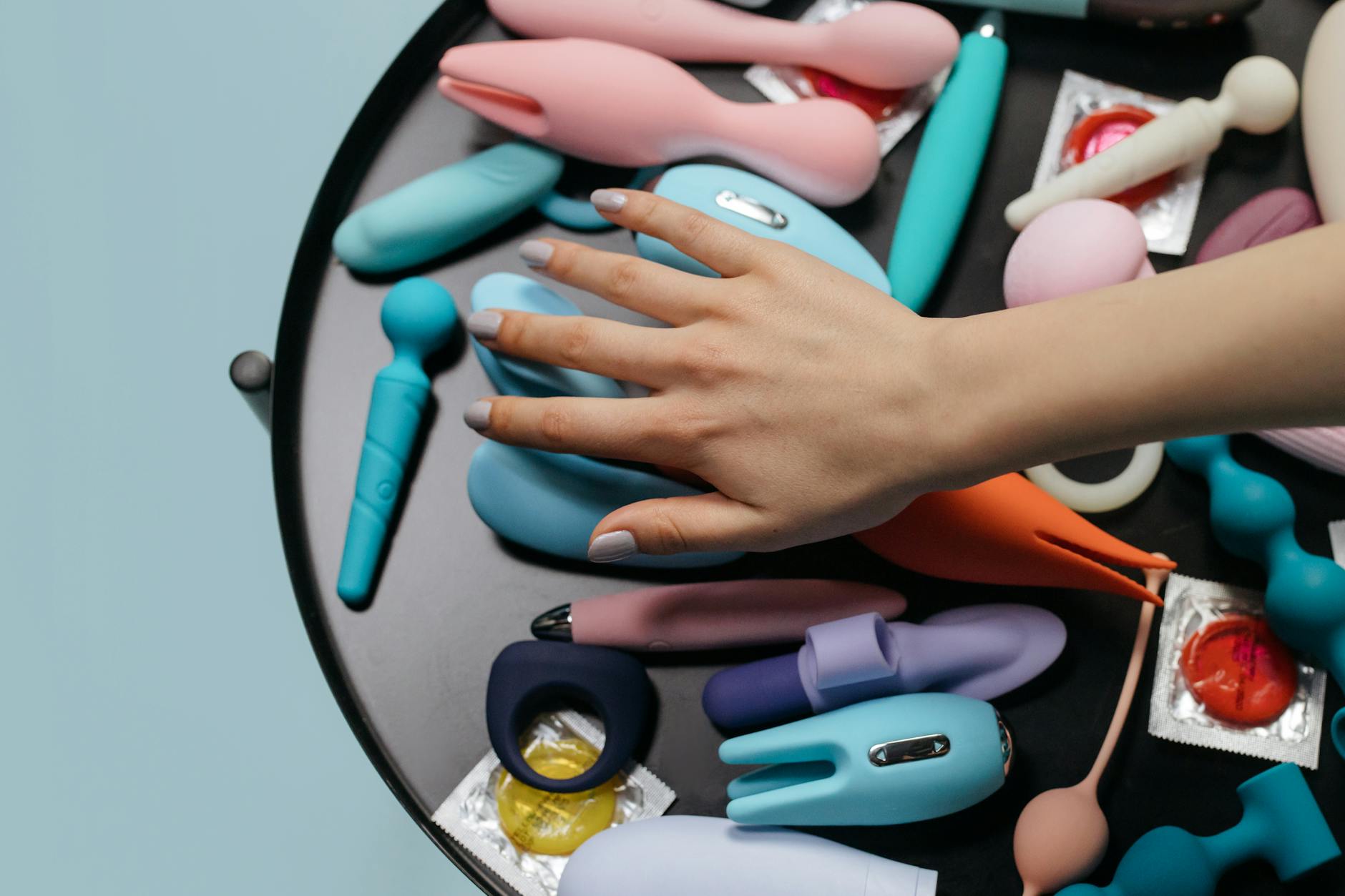
Photo by cottonbro studio on Pexels
Why the lem vibrator hits differently
A traditional clitoral vibrator uses oscillation. It's a shake or buzz pattern. Lemon sexual toys use air-pulse technology that creates rhythmic suction and release. The difference is significant for post-orgasm sensation.
Suction creates what feels like a "pulling" stimulation rather than a "pressing" one. When your clitoral tissue is already hyperaware (which it is after orgasm), that pulling sensation registers much more intensely. Your nerve endings aren't just being touched; they're being drawn upward into the suction cup. Combined with the already-heightened sensitivity, it can feel overwhelming.
This isn't a flaw in lemon clitoral vibrators. It's actually one reason they work so well during foreplay and for extended sessions. But it does mean you need a different strategy immediately after you come.
What to do in that hypersensitive window
You have three solid options, and which one works depends on what you actually want to do.
Option one: pause completely. Turn off the lem vibrator. Remove it entirely. Let your body rest for two to five minutes while your nervous system recalibrates. This is perfect if you're done and satisfied. Your clitoris will return to baseline, and any discomfort evaporates.
Option two: pull back to the gentlest setting. If you want to keep going, don't reach for pattern one. Reach for the "lowest of the low." Many hello nancy lemon clitoral vibrators have a gentle pulse mode that's below the standard level-one setting. Use that. Keep the suction cup barely making contact. You're not looking for stimulation here; you're just maintaining connection while your sensitivity recalibrates. It takes another minute or two, but then you can gradually build back up.
Option three: change the location. Instead of staying on the glans (the head of the clitoris where the most nerve density sits), move the lemon vibrator or clitoral sucker to the shaft or the labia. Same device, different zone. The surrounding tissue is less raw, so the sensation feels pleasant instead of overwhelming. You can keep the sensation going without the intensity spike.
The timing resets faster than you'd think
Honestly, this hypersensitive phase is shorter than most people expect. If you're in it and it's uncomfortable, you're probably only minutes away from it passing. Many people try to push through, create a bad association with the lem vibrator, and then avoid it the next time. Don't do that. The tool isn't the problem.
One note: the refractory period does shift with age and hormonal status. If you're menstruating, the week before your period you might find the hypersensitivity window lasts longer and feels more pronounced. If you're on hormonal birth control, it might be shorter and milder. If you're perimenopausal or post-menopausal, it can swing wildly depending on the day. None of this means anything's wrong with you or the device. It's just biology adjusting to different hormonal contexts.
Building tolerance over time
Here's something I've noticed with people who use lemon clitoral vibrators regularly: the post-orgasm intensity tends to decrease with familiarity. Your nervous system learns the pattern. The first time you use a lem vibrator, the sensation might be shocking. By week two or three of regular use, your body has cataloged what's coming. The intensity doesn't feel as foreign.
This is called neural adaptation. Your nerves literally become less reactive to a stimulus the more often they encounter it. It's the same reason a loud alarm doesn't seem as loud after a few weeks. You're not losing sensation; you're gaining context.
When intensity is actually a problem
There's a difference between normal post-orgasm sensitivity and pain that shouldn't be there. If you're experiencing sharp pain, burning, or a sensation that doesn't ease within a few minutes of stopping stimulation, that's worth investigating. Possible causes include micro-tears in delicate tissue, irritation from lubrication (or lack of it), or an underlying condition like contact dermatitis.
If that's happening, check that you're using water-based lubricant compatible with silicone toys. Ensure you're not pushing through genuine pain. And if the pattern continues, check in with a gynecologist. Some people have sensitivities to materials or need a different approach entirely.
For the vast majority, though, post-orgasm intensity with lemon vibrators is normal neural activity, not a warning sign.
Multiple orgasms and the intensity curve
If you're interested in having multiple orgasms, the hypersensitivity window is actually useful information. Many people stop after the first orgasm because the second one feels "wrong" or too intense. But if you pause during that refractory phase, give your clitoris a genuine rest (not just a setting change), and then resume, the second orgasm often feels completely different from the first. Sometimes deeper. Sometimes sharper. Always distinctive.
This is why longer foreplay sessions with lemon vibrators work so well. You're not rushing through the entire experience back-to-back. You're building, pausing, recalibrating, and building again. Each orgasm gets to be its own event rather than a blur of overlapping sensations.
The role of mental state
I've found that anxiety about the intensity actually amplifies it. If you're braced for discomfort, you're more likely to perceive it. If you come in with the understanding that this is a normal, temporary phase of your nervous system working at peak capacity, the sensation often feels less alarming even if it's equally strong.
Part of managing post-orgasm intensity is mental framing. You're not broken. The lem vibrator isn't too strong for you. Your nervous system is doing its job. That reframe alone changes how the sensation registers.
FAQ
Why do lemon vibrators feel more intense after orgasm than traditional vibrators?
Lemon clitoral vibrators use suction technology rather than vibration, which creates a different type of stimulation. Suction creates a "pulling" sensation on already-sensitized nerve tissue, which registers as more intense than the oscillating buzz of a traditional vibrator.
How long does post-orgasm sensitivity last?
The acute hypersensitive phase typically lasts 30 seconds to five minutes. It varies based on how intense your orgasm was, your age, hormonal status, and your individual nervous system wiring. If sensitivity persists beyond that window or feels painful, that's worth investigating.
Can I keep using a lemon clitoral vibrator after I come, or should I stop?
You can do either, depending on what feels good. If it's overwhelming, pause or remove the device entirely. If you want to continue, switch to the gentlest setting or move to a less sensitive area. Your body will tell you what works.
Does post-orgasm intensity mean the lemon vibrator is too strong for me?
No. That intensity is your nervous system responding normally to stimulation at peak capacity, not a sign that the device is incompatible with your body. Most people find lemon vibrators work beautifully for sensitive tissue specifically because they're gentler than traditional vibrators.
Does the refractory period get shorter or longer as you age?
It varies. Some people find it gets shorter with age and experience. Others find it gets longer or more pronounced around perimenopause. There's no universal pattern. What matters is knowing your own baseline and adjusting your approach accordingly.
Will I get used to the post-orgasm intensity if I use a lemon clitoral vibrator regularly?
Yes, typically. Your nervous system adapts to familiar stimuli. Most people find that post-orgasm intensity feels less surprising and disruptive after a few weeks of regular use. You're not losing sensitivity; you're gaining neural context.
What actually matters
Post-orgasm intensity with lemon vibrators isn't something to fear or push through. It's information about how your nervous system works. Once you understand what's happening, you can work with it instead of against it. That might mean pausing, shifting settings, changing location, or simply breathing through it knowing it'll pass in minutes.
Your pleasure doesn't have to follow a linear path. It doesn't have to feel the same every time. And your body doesn't have to cooperate with an arbitrary timeline. Understanding how lemon sexual toys interact with your unique neurology is how you actually make them work for you, not just with you.
If you have questions about your specific experience or want personalized guidance on technique, reach out to our team. We're here to help you figure out what works.