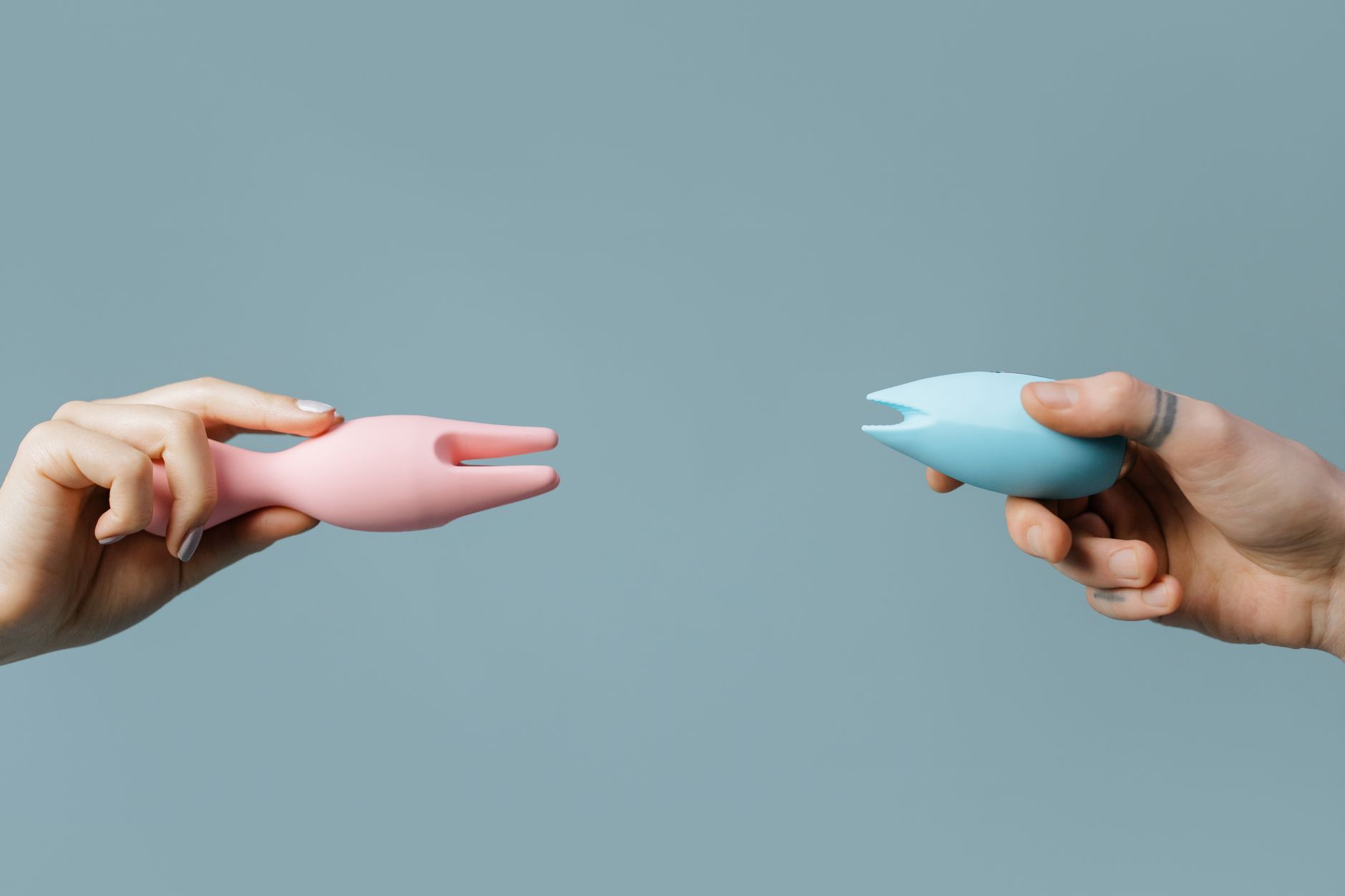
When reunion doesn't feel automatic
You've been apart for months, a year, or longer. Military deployment, long-distance work contracts, caring for a parent across the country. Now you're back in the same bed, and your bodies don't quite remember how to move together. That's not a failure. It's just physics. When couples separate for extended periods, the nervous system needs recalibration. Touch feels unfamiliar. Arousal doesn't build the way it used to. Pressure to perform makes everything worse.
This is where most couples reach for their old vibrators, hoping familiarity will bridge the gap. It doesn't. Traditional bullet vibrators and wand massagers have one job: intensity. After a long break, intensity often backfires. It can feel overwhelming on tissue that's been without regular stimulation. It can create performance pressure instead of ease.
Lemon vibrators work differently. And if you're rebuilding intimacy after separation, they're genuinely your better tool.
How separation changes the nervous system
When you're apart for an extended time, your body doesn't just forget habit. Your arousal pathways literally recalibrate. The nervous system becomes less responsive to stimulation because the trigger (your partner's presence, touch, smell, voice) has been absent. Dopamine pathways that fire with anticipation go quiet. The body's overall responsiveness to pleasure dampens. This isn't emotional distance necessarily. It's neurological recalibration.
Add the reunion itself, and you've got a second layer of complexity: performance anxiety. You want to want them the way you used to. You worry they'll notice you don't. Your body tenses. The clitoris is exquisitely sensitive to nervous system state, and tension shuts it down.
Traditional vibrators demand immediate responsiveness. A bullet vibrator at medium speed expects the clitoris to wake up fast. For couples reconnecting, this creates a cascading problem: mild stimulation doesn't work because the nervous system is dampened, but intense stimulation feels like too much because tissue and sensation are rusty.
Lemon clitoral vibrators solve this with suction technology instead of direct vibration.
Why suction rebuilds faster than friction
Here's the functional difference: traditional vibrators shake the clitoris. Lemon vibrators create a gentle suction seal that stimulates without friction. For couples returning to each other, this matters enormously.
Suction distributes stimulation across the entire clitoral body (not just the tip). It works on layers. It can build arousal so gradually that the nervous system barely registers it's happening. You don't feel a machine humming against you. You feel a gentle, almost playful sensation that builds. This is the opposite of having to go from zero to arousal instantly.
When you're rebuilding intimacy, gradual is your friend. Gradual lets your partner participate. Gradual gives your nervous system permission to relax. Gradual often leads to the kind of deepening that couples report as more connected than anything pre-separation.
Second, suction technology requires less conscious effort from the person receiving stimulation. With a traditional vibrator, you're managing angles, pressure, intensity. You're kind of performing your own pleasure for your partner's benefit. With a lemon vibrator, you set it and the sensation does the work. You can actually focus on your partner. You can make eye contact. You can let your body respond without narrating it.
The partner element changes everything
Reconnection isn't just physical. It's relational. Your partner has probably spent the separation wondering if they'd still know how to touch you. They're watching your body for signals that they're doing it right. This creates a weird feedback loop where you're both holding back.
Lemon vibrators break that loop because they take some of the pressure off the partner's performance. Instead of "Am I touching them correctly," it becomes "I'm using this together with them, and we can both watch what happens." The toy becomes a collaborative element, not a replacement for connection.
Many couples who reconnect tell me that introducing a lemon clitoral vibrator in their reunion is the thing that softens them both enough to be vulnerable again. It's lighter than bringing a toy into an already fragile moment. It's playful. It feels like exploration rather than desperation.
Timing, settings, and the rebuild protocol
If you're using a lemon vibrator after separation, here's what actually works from my experience with couples rebuilding.
First reconnection (week one). Don't jump straight to full arousal play. Start with the vibrator on the lowest setting during non-sexual time. Hold it together in your hands. Touch each other while it's running. Let the novelty settle before you're trying to be turned on. This gives your nervous system permission to remember that touch with this person is safe and pleasurable.
Week two. Introduce it into foreplay, still on lower settings. This is not the main event. It's a warm-up layer. Let arousal build slowly before you use it on the clitoris. Start on the outer labia if the direct sensation feels too much.
Week three onward. You'll both know what your nervous systems need by now. Many couples find they don't need the intensity settings they thought they did. They're rebuilding sensation, not chasing orgasm.
The conversation you have to have first
Introducing a lemon vibrator during reunion only works if you name what's actually happening. Not "I want to try toys," which can land as "our sex is boring." Instead: "We've been apart. Our bodies need to remember how to feel good together. I want to use something that makes that easier and more fun."
If your partner has insecurity about the toy replacing them, address it directly. A lemon vibrator isn't doing what fingers and a partner's mouth do. It's doing what nothing else does: creating a specific sensation that's part of your collective experience. It's including them, not replacing them.
Some couples need to use the vibrator together on one partner, then switch. Some use it during partnered sex. Some find that after a few sessions of reconnection with it, they don't need it anymore because the nervous system has rebooted and spontaneous arousal is returning. All of these are wins.
When reunion happens alongside other changes
Long separations often coincide with other life shifts. You're older now. One partner has changed jobs. Someone's been through stress, medication changes, or body shifts. Reuniting isn't just bridging time. It's bridging versions of yourselves.
If your partner is rebuilding pleasure after antidepressants, hormonal changes, or trauma, a lemon vibrator becomes even more valuable because it's gentle enough to use with bodies in transition. You're not adding pressure to an already complicated return.
Similarly, if you're both in your 40s or 50s and approaching or through menopause, the tissue changes that come with hormonal shifts mean that a lemon sucker works better than it would have pre-separation. You're literally adapting your tools to your current bodies, not trying to resurrect pre-separation protocols.
What makes this different from other reconnection advice
Most relationship advice about reuniting focuses on conversation, emotional processing, and "making time." Those things matter. But your body doesn't reconnect just because you've talked things through. Your nervous system needs specific input to remember how to respond. A lemon vibrator is that input.
It's not romantic in a candlelit way. It's practical, playful, and evidence-based. It acknowledges that reunion after long separation is real work and that your pleasure matters enough to use the right tools.
The research backing this
Studies on couples separated for military deployment show that couples who communicate about physical intimacy before reunion have significantly easier transitions. Couples who introduce new elements during reconnection (including sexual tools) report higher satisfaction with the rebuilt intimate connection than couples who try to replicate pre-separation patterns exactly. The nervous system isn't wired for exact replication. It's wired for novelty and safety together.
Additionally, research on suction-based stimulation versus traditional vibrators shows that people with nervous systems in a heightened or dampened state (which separation creates) respond better to gradual, layered stimulation than to direct vibration. This is true across testosterone and estrogen-dominant bodies.
Making the jump
If you're reconnecting after time apart and considering a lemon vibrator, you're already halfway there. The decision to intentionally rebuild is the thing. The tool just makes it easier.
Start the conversation without shame. Use it together first. Let it be playful, not serious. And understand that if this is what helps your bodies remember how to want each other again, that's not settling. That's smart.
People also ask
How long does it take for couples to feel natural together again after long separation?
It depends on how long apart and the quality of your reconnection practices. Most couples report that deliberate, pressure-free touch (like what a lemon vibrator creates) accelerates the process by weeks. Without intentional rebuilding, nervous system recalibration can take months. With it, many couples feel genuinely reconnected within 3-4 weeks.
Can we use a lemon vibrator if our partner is uncomfortable with toys?
This is exactly why framing matters. Instead of "I want to use a toy," try "I want us to explore this together because I want reunion to feel good for both of us, not pressured." If your partner is genuinely uncomfortable, pushing won't help. But having a conversation about what specifically worries them (replacement? performance comparison? awkwardness?) often opens the door. Many hesitant partners find that once they see a lemon vibrator in action, the gentle suction feels collaborative rather than threatening.
Is there a difference between lemon vibrators and other clitoral vibrators for reconnection?
Yes. The suction mechanism matters because it creates graduated stimulation instead of immediate intensity. A traditional vibrator is kind of an on/off switch. A lemon clitoral vibrator is a dimmer switch. For reuniting couples, the dimmer is functionally superior because it lets arousal build at a nervous-system-friendly pace. If your partner has sensitivity issues or trauma history, this difference becomes even more significant.
What if one partner wants reunion to feel "normal" again and resists trying new things?
This is a real tension. Wanting things to feel like they used to is natural. But bodies don't work that way after separation. Time changes us. You're not the same people. Gentle framing: "We could try to go back, or we could build something even better by adapting to who we are now." Sometimes bringing in a lemon vibrator is what makes that shift feel possible instead of scary.
Can lemon vibrators help if we're struggling with emotional reconnection, not just physical?
Partially. Physical intimacy can't fix emotional disconnection, but it can make the emotional work easier. When your body feels safe and pleasure is rebuilding, you're less defensive. You're more open to the conversations that emotional reconnection requires. Use the vibrator as part of a broader approach, not as a substitute for real talk about what you've both been through during separation.
How often should couples use a lemon vibrator during reconnection?
There's no rule. Some couples use it a few times to reignite sensation, then naturally stop. Some incorporate it into regular intimate time. The question isn't frequency, it's responsiveness. Are you both feeling closer? Is pleasure returning naturally? Is pressure lifting? If yes to those, you're using it right. If you feel dependent on it after a month or two, that's a signal to pause and check in about what's underneath.
Ready to rebuild together
Reunion after long separation is one of the more vulnerable moments in a relationship. You're hoping your bodies still recognize each other. A lemon clitoral vibrator won't fix problems that existed before you parted. But it will give your nervous systems the gentlest, most collaborative way to remember how to feel good together. Sometimes that's exactly what reunion needs.
If you want more guidance on navigating reconnection or have questions about rebuilding intimacy after time apart, reach out at /contact. I'm here to help couples navigate this tender moment with intention and without shame.