
Here's what nobody tells you about birth control and your body
You went on the pill, the implant, the IUD, or the injection to prevent pregnancy. What you didn't sign up for was the quiet reshaping of your pleasure. And yet, for many people, that's exactly what happens. The same hormones that stop ovulation also change how your clitoris responds, how fast you get aroused, and sometimes whether you can orgasm at all.
The thing is, this isn't a side effect you have to accept as permanent. Your body isn't broken. It's adapted to a different hormonal baseline. And lemon vibrators, with their unique approach to clitoral stimulation, often work better for this shifted state than the vibrators you used before.
How birth control actually changes sensation
Hormonal contraception suppresses or alters your natural estrogen and progesterone levels. This changes three specific things in your body:
Blood flow to the genitals decreases. Estrogen is responsible for vascular dilation. When it drops or becomes artificially regulated, less blood reaches your clitoris during arousal. Less blood flow means slower arousal response and sometimes reduced swelling during stimulation.
Clitoral tissue sensitivity can shift. Some people report heightened sensitivity on hormonal birth control. Others feel numbed. This variation depends on the specific hormone type and dose, and how your individual neurology responds to it. Progesterone-heavy methods tend to dull sensation more than estrogen-dominant ones.
Lubrication patterns change. Cervical mucus production is directly tied to your cycle. On hormonal birth control, your cycle is suppressed, so lubrication becomes more constant and sometimes less abundant. The texture also changes. Your vagina is drier, which affects friction during penetration and external stimulation.
Here's the part doctors often skip: these changes affect your clitoris more directly than your vagina, because the clitoris has fewer nerve endings devoted to lubrication and more devoted to sensation itself.
Why lemon vibrators feel different for birth control bodies
Traditional vibrators rely on rapid oscillation or constant vibration. They work great for bodies with natural hormone cycles because the clitoral tissue swells readily and is primed for that kind of direct contact. But on hormonal birth control, that direct hammering can feel either too much or too little, depending on your sensitivity shift.
Lemon vibrators, including the Lem by Hallo Nancy's Lems, use air-suction technology instead of vibration. Here's why that matters for your hormonally-altered body:
Suction builds sensation gradually. Instead of hitting the same nerves repeatedly at high speed, suction creates a gentler pulse-and-release rhythm. This works better when blood flow is reduced because it actually helps draw blood to the clitoris, mimicking the natural engorgement your body might be struggling to achieve on its own.
Suction is less dependent on tissue swelling. Traditional vibrators need your clitoris to be engorged to work effectively. Air-suction devices create their own microclimate of pressure, so they function well even when your tissue isn't as swollen as it used to be.
The sensation pathway is different. Suction activates different nerve clusters than vibration does. For people whose vibration sensitivity has shifted on birth control, suction often feels fresher and less numb.
In practice, this means you can often use lower settings on a lemon clitoral vibrator and still reach orgasm faster than you would on a traditional vibrator's higher settings.
The timeline thing: how long does it take to reconnect
Here's the honest part. If you've been on hormonal birth control for years and just switched methods or stopped entirely, don't expect sensation to snap back immediately. Your nervous system has adapted. Your pleasure pathways have re-routed.
But it does come back. Usually within 3 to 6 months after a hormonal change, people report noticeable shifts. Some notice it within weeks.
What lemon vibrators do is compress that timeline by helping you build new arousal patterns while your body is in transition. You're not fighting against your current hormonal state. You're working with it.
The practical setup for birth control bodies
If you're rebuilding pleasure after a birth control switch, here's what actually works:
Start with pattern 1 or 2. Even if you used higher settings before, your current tissue is different. Low patterns feel novel and often more effective.
Add lubrication intentionally. Because your natural lubrication might be lower, water-based lube becomes essential. This isn't about anything being broken. It's about creating the conditions for pleasure to happen.
Extend your warm-up time. Give yourself 15 to 20 minutes of building arousal before reaching for the toy. Read erotica, fantasize, use your hands. This builds blood flow gradually and primes your nervous system.
Explore sensation mapping. Your clitoris probably still has the same nerve density, but the wiring feels different. Spend a few solo sessions just learning where sensation is strongest now. The suction approach of lemon vibrators makes this feel less clinical and more playful.
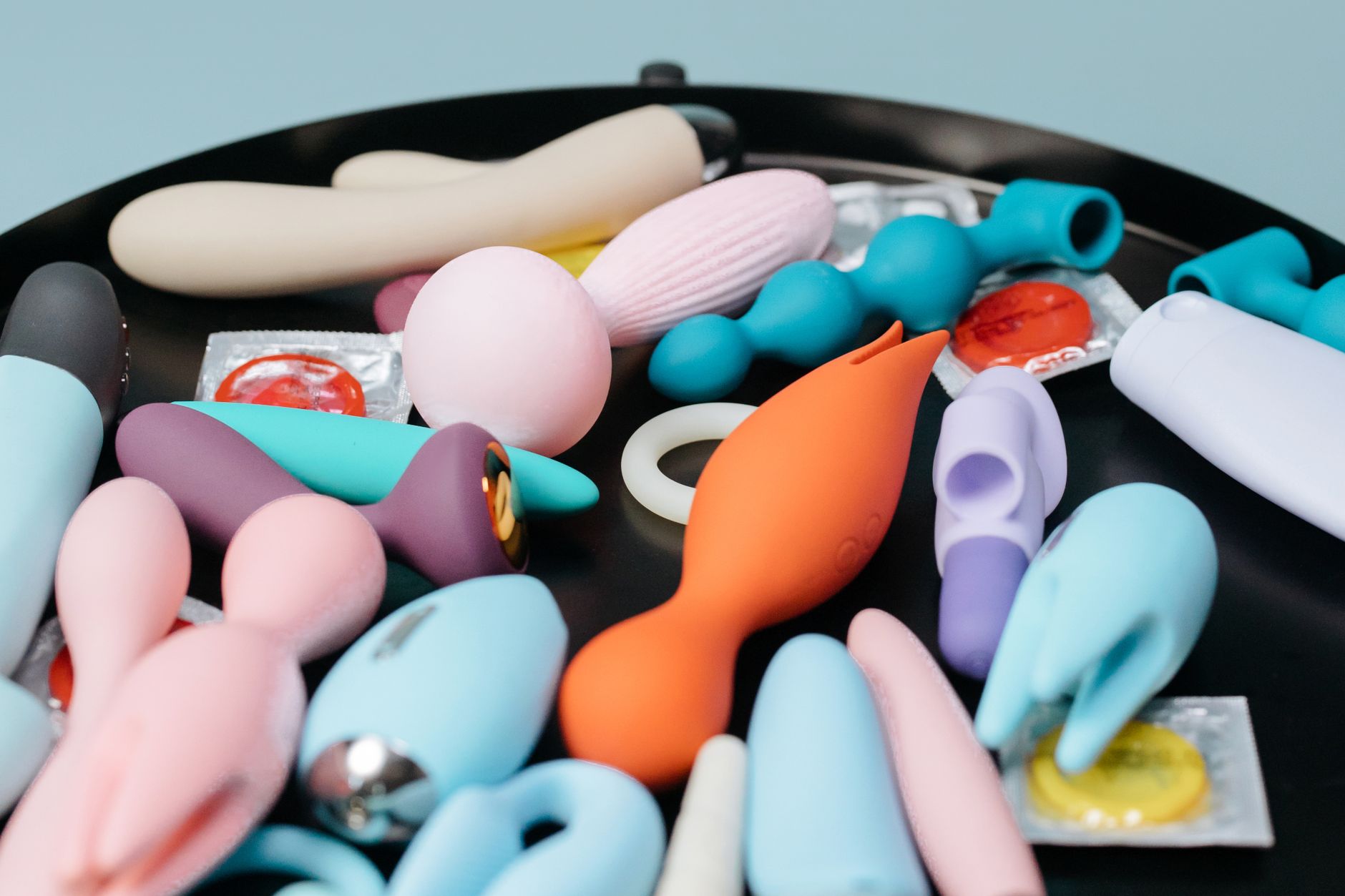
Photo by cottonbro studio on Pexels
What this means for partnered pleasure
If you have a partner, the hormonal shift is affecting both of you in different ways. Your arousal is different. Your orgasm timeline might be longer. Your desire might be lower. These are all real, and all temporary.
The temptation is to assume something's wrong with the relationship. Usually it's just chemistry. Using a lemon clitoral vibrator together, if that feels right for you, can actually be a way to explore how your body works now instead of trying to recreate how it worked before.
Here's what helps: talk about it before, not during. "My body is responding differently to stimulation right now" is a conversation separate from "I want us to reconnect." Many couples confuse the two and end up addressing neither.
When to check in with a doctor
If your pleasure hasn't started to return within 6 months of a birth control change, it's worth a conversation with your GP or gynecologist. Some people's bodies genuinely respond better to different contraceptive methods. A switch to a lower-dose pill, a non-hormonal IUD, or a different progestin type can make a real difference.
If you're experiencing pain alongside the pleasure changes, don't wait. Pain is separate from sensation shift and needs its own evaluation.
The mental piece (which is actually the biggest piece)
Here's what I see in my practice: the physical changes from birth control are real, but the psychological weight is often larger. You internalize the narrative that your body is broken or your relationship has cooled. You stop initiating. You start performing instead of feeling.
Reconnecting with pleasure after a hormonal shift isn't just about finding the right toy. It's about giving yourself permission to explore your body as it is now, not as it was before. That's where lemon vibrators become useful as more than a device. They become a marker of intentionality. "I'm going to spend time learning what feels good in this new configuration."
That shift in mindset often matters more than the toy itself.
People also ask
Does birth control permanently change clitoral sensitivity?
No. Your clitoris has the same nerve density before, during, and after hormonal contraception. What changes is blood flow, tissue thickness, and how quickly arousal builds. Once you switch contraceptive methods or stop hormonal birth control, sensitivity usually returns to baseline within a few months. For some people, sensitivity actually improves after stopping hormonal methods because the underlying inflammation many experience on synthetic hormones resolves.
Can a lemon vibrator work if I'm still on birth control?
Absolutely. In fact, lemon vibrators often work better on hormonally-suppressed bodies than traditional vibrators do, because they don't rely as heavily on tissue engorgement. The suction approach is gentler and more gradual, which suits bodies with reduced blood flow. Many people stay with lemon clitoral vibrators even after stopping birth control because they prefer the sensation.
How long does it take for pleasure to come back after stopping hormonal birth control?
It varies. Some people notice shifts within 2 to 3 weeks. Others take 3 to 6 months. Your nervous system needs time to recalibrate to your natural hormone cycle. The timeline also depends on how long you were on hormonal birth control. Someone who used it for 10 years might take longer to readjust than someone who used it for 2 years. Using a lemon vibrator during the transition doesn't speed up hormonal recovery, but it does help you explore sensation while your body is changing.
Is numbness from birth control the same as desensitization from vibrator overuse?
No, and the distinction matters. Birth control numbness comes from systemic hormonal suppression affecting blood flow and nerve responsiveness. Vibrator desensitization comes from overstimulation of the same nerves in the same way, over and over. Birth control numbness usually resolves with a hormonal change or time. Vibrator desensitization resolves with a break or a switch to a different type of stimulation (like suction). If you're experiencing numbness from birth control, a lemon vibrator is often a better choice than returning to traditional vibrators, because it uses a different stimulation method entirely.
Can I use a lemon vibrator if I'm on the implant or hormonal IUD?
Yes. In fact, people on implants and hormonal IUDs often report the same sensation shifts as people on pills. The lemon vibrator approach works just as well because it's not dependent on your hormone levels. It works with your body as it is now. Some people find that using lemon vibrators actually helps them decide whether a particular contraceptive method is right for them long-term. If pleasure hasn't returned after 6 months on a method that you otherwise like, it might be worth trying a different one.
What if I've tried everything and pleasure still hasn't come back?
First, you've probably tried less than you think. Rebuilding pleasure after hormonal shifts takes intentionality, and most people give it a few weeks. Give yourself at least 3 months of consistent, pressure-free exploration before concluding something is wrong. Second, if you are struggling after 6 months, talk to a doctor or a sex therapist who specializes in hormonal changes. Sometimes a small adjustment in contraceptive type makes a huge difference. Sometimes the issue is relationship-based or neurological and needs a different kind of support. The point is you don't have to just accept it.
You deserve to feel good in your body
Birth control is a gift. It gave you reproductive autonomy. But that autonomy comes with a conversation your body deserves to have about how it actually feels in this hormonally-altered state. That conversation doesn't have to be complicated or clinical.
Lemon vibrators, designed from the ground up for bodies that need a gentler, different approach to pleasure, are one way to have that conversation with yourself. Not as a fix for something broken, but as a tool for reconnection during a transition your body is genuinely going through.
If you're navigating this shift and want personalized guidance, we're here to help. Reach out at /contact.