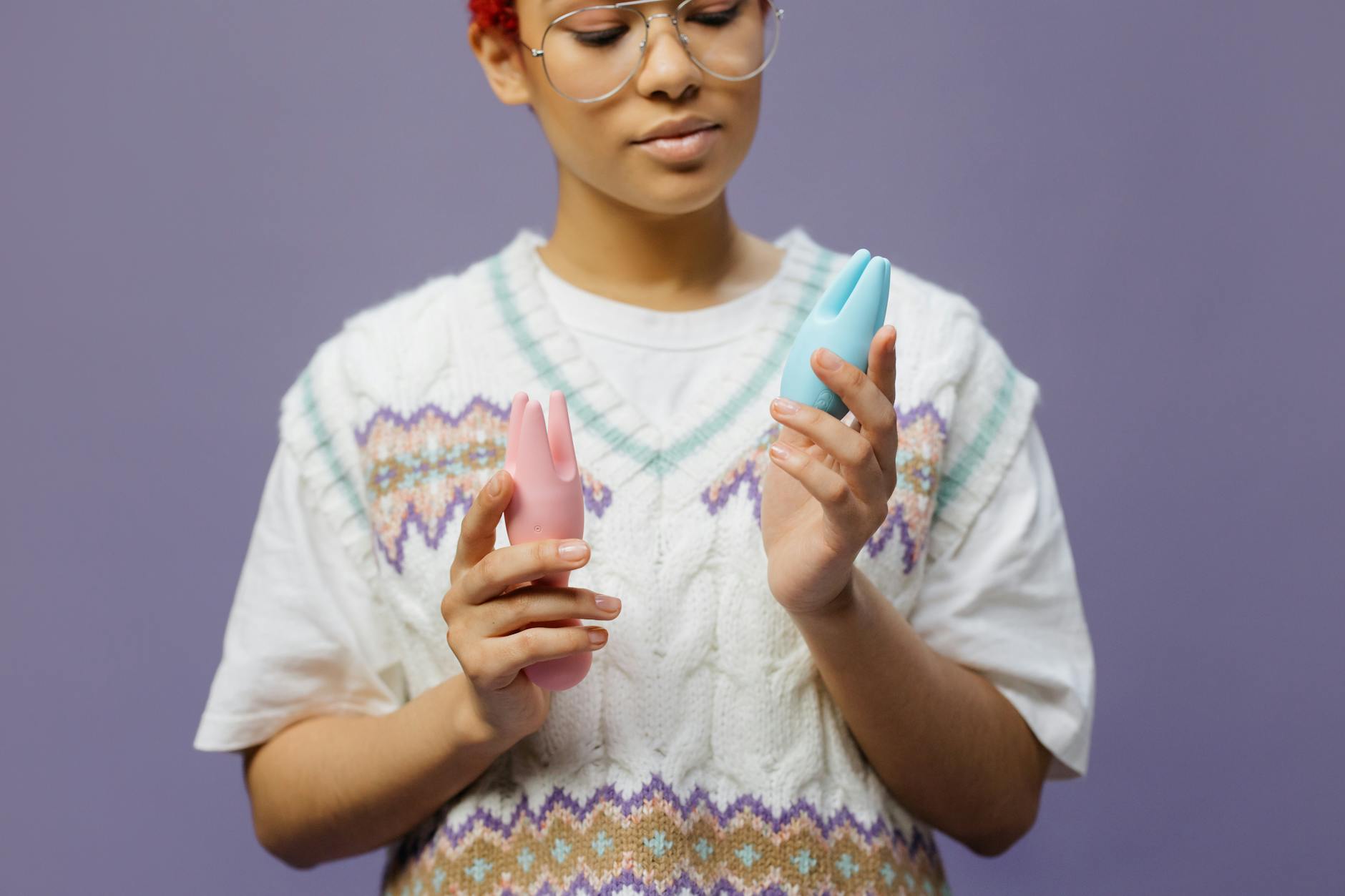
Let's talk about what nobody mentions at the gynecologist
PCOS, thyroid imbalances, insulin resistance, elevated androgens—these conditions mess with arousal in ways that standard sex advice completely misses. Your pleasure doesn't follow a calendar. Your sensitivity fluctuates wildly. Some days stimulation feels like nothing, other days it feels like too much. And most of the time, you're told to just push through it or that it's all in your head. It's not.
Hormonal imbalances change how your body responds to touch, how quickly you can climax, and what kind of pressure feels good. A lemon vibrator—especially an air-suction clitoral vibrator like the Lem—works differently than a traditional vibrator, and that difference matters enormously when your hormones are in flux.
How hormonal imbalances actually affect pleasure
When your estrogen, testosterone, and progesterone aren't balanced, three specific things happen in your body.
First, blood flow to the clitoris becomes inconsistent. Estrogen helps with vasocongestion—the engorgement that makes your clitoris swell and become more reactive. When estrogen is low or erratic, that engorgement takes longer to build or doesn't happen fully. You might notice arousal feels muted or requires more time.
Second, your nervous system sensitivity shifts. High androgens (which happen in PCOS) can make nerve endings more reactive—which sounds good until you're mid-session and suddenly everything feels too intense. Progesterone, on the other hand, tends to calm the nervous system. Low progesterone can leave you feeling hypersensitive or unable to relax into pleasure.
Third, vaginal tissue quality changes. Hormonal imbalances often mean thinner vaginal tissue and less natural lubrication. This isn't about being "broken"—it's about the tissue literally responding to hormonal signals. Traditional vibrators with direct friction can feel scratchy or irritating. Lemon vibrators work with suction instead of vibration alone, which means less direct friction and more distributed pressure.
Why air-suction vibrators work better for hormonal imbalances
A lemon clitoral vibrator uses gentle suction to stimulate the clitoris rather than relying on vibration or thrusting alone. For someone with hormonal imbalances, this matters.
With suction-based stimulation, you're not fighting friction against sensitive tissue. The sensation is more diffuse—it spreads across a larger area rather than concentrating all the pressure in one spot. If your androgens are high and your nerves feel raw, suction gentler than direct vibration feels more manageable. If your estrogen is low and you need more time to build arousal, the ramp-up with suction happens more gradually, which can actually help.
The Lem and other lemon clitoral vibrators also come with variable intensity levels. If you're having a hypersensitive day, you can start at pattern 1 or 2. If your arousal is sluggish, you can work up to higher patterns without feeling like you're jumping from nothing to overwhelming.
Reading your cycle when your cycle is unpredictable
Here's where hormonal imbalances get tricky. If you have PCOS or another condition that disrupts regular ovulation, your cycle might not follow the textbook follicular-luteal pattern.
Instead of tracking days, track sensations. Spend one week paying attention to how your clitoris feels when you're solo. Notice whether sensitivity is high or low, whether arousal builds quickly or slowly, whether you need lubrication or not. Mark this down—in a note app, a tracking app, or just in your head.
You'll likely notice patterns that repeat every few weeks or months, even if they don't align with a 28-day cycle. Maybe every three weeks you have a window where you feel sharp, reactive, almost oversensitive. Or maybe there's a stretch where arousal feels completely flat and distant. Those are your rhythms. Work with them.
On high-sensitivity days, use your lemon vibrator at lower intensities and spend more time on the outer patterns before moving inward. On low-arousal days, you might start at a higher intensity or use the vibrator for longer warm-up time.
Lubrication and tissue sensitivity
If you have PCOS or hormonal imbalances, you probably already know that lubrication is inconsistent. Some days you're fine, other days you're dry despite arousal. This is the hormones, not low desire.
Always have a water-based lubricant on hand. Not because anything is wrong with you, but because it removes friction and makes the experience smoother. Apply it to the external clitoris before using your lemon vibrator, even if you don't think you need it. Hormonal imbalances often mean lubrication is less visible than it used to be, so you can't always judge by sight.
If you're using a lemon clitoral vibrator, a little lubrication also helps the suction seal better and makes the sensation feel more consistent. You're not adding friction—you're reducing it.
If standard water-based lube irritates you, try a hypoallergenic option. Coconut oil is tempting but will degrade silicone toys. Stick to water-based or silicone-based lubes depending on your toy material.
When to pause and when to push through
There's a difference between "this feels uncomfortable and I should stop" and "this feels unfamiliar and I need to give it a moment."
With hormonal imbalances, sometimes arousal just takes longer. The sensation builds more slowly. This is not a sign to quit. It's a sign to adjust your timeline. Instead of 10 minutes, allocate 20 or 30. Start at lower intensities and stay there longer. Use warm-up time intentionally.
But if you feel sharp pain—not pressure, not intensity, but actual pain—stop. Sharp pain with hormonal imbalances sometimes means tissue irritation, which is worth addressing. If it happens repeatedly, talk to a gynecologist. Treatments like topical estrogen or vaginal moisturizers can help. And then come back to your lemon vibrator when the tissue feels better.
Using lemon vibrators with a partner when your hormones are unpredictable
If you're with a partner, communication becomes even more important. Your body is not behaving predictably, and that's not something you need to hide or manage alone.
Tell your partner: "My sensitivity changes throughout the month. Some days I need more time, other days I need lower intensity. I'm going to tell you what I need as we go." That's it. No apology, no explanation of what's "wrong."
If you're using a lemon clitoral vibrator together, you can both experiment with intensity levels. A partner can hold it while you guide them on pressure and speed. Many people find that using air-suction vibrators together feels less intimidating than traditional vibrators because the sensation is gentler and more easily adjustable.
If your partner also wants stimulation and their needs are different from yours, each of you can have your own approach. Lemon vibrators work better when your partner wants different things sexually, and that flexibility is especially valuable when hormones are in the mix.
Managing medication interactions
Some medications for hormonal imbalances—like metformin for PCOS or thyroid medications—don't directly affect sexual response. But antidepressants and anti-anxiety meds, which are often prescribed alongside hormone treatment, do affect arousal and sensation.
If you recently started a new medication and noticed your pleasure changed, that's likely real. If you're on antidepressants that lower libido, a lemon vibrator might actually help because it requires less arousal to "activate." You don't need to be super turned on for suction to feel good. It can actually help build arousal from a lower baseline.
If the medication change is recent and severe, talk to your prescriber. Sometimes adjusting timing, dosage, or medication type helps without stopping what's working for your hormones.
Patience as a strategy
The hardest part of navigating pleasure with hormonal imbalances isn't technical. It's not about finding the right vibrator pattern or the best lubrication. It's about letting go of the idea that your body should feel consistent.
It won't. Your body is dealing with a physiological condition that affects everything—energy, mood, metabolism, and yes, pleasure. That's not a failure. Using a lemon clitoral vibrator isn't a workaround for a broken system. It's a tool built for exactly this kind of body: one that needs flexibility, gentleness, and the ability to adjust on the fly.
Your desire and capacity for pleasure haven't gone anywhere. They're just operating on a different schedule now.
Frequently asked questions
Can hormonal imbalances permanently affect pleasure with lemon vibrators?
No. Hormonal imbalances change how your body responds in the moment, but they don't rewire your capacity for pleasure. If you start treating the hormonal imbalance—whether that's medication, lifestyle changes, or both—your arousal and sensitivity often shift back. And even during treatment, a lemon clitoral vibrator adapts to whatever your current baseline is.
Should I use my lemon vibrator more or less often when my hormones are out of balance?
Use it as much as feels good. There's no risk to frequent use. Some people find that regular self-pleasure actually helps regulate arousal over time because you're giving your nervous system consistent, predictable stimulation. Others prefer less frequent use when they're struggling with sensitivity. Go with what feels sustainable.
Does PCOS specifically make certain lemon vibrator patterns better than others?
Not universally, but people with PCOS often report that lower-intensity patterns feel less overwhelming on high-sensitivity days. Start low and work up rather than starting at a pattern that used to feel good. Your baseline might have shifted.
Can I use a lemon clitoral vibrator if I'm on hormonal birth control to manage PCOS?
Absolutely. Birth control for PCOS doesn't change how vibrators work. Some people find that certain birth control pills help stabilize their arousal, which can make pleasure more predictable. Keep tracking your sensations so you can notice changes.
What if my hormones are balanced but my lemon vibrator still feels less intense than it used to?
This could be tolerance—your nervous system has adapted to the sensation—or it could mean you need a different approach that day. Try taking a break for a few days, or experiment with using the vibrator differently: different angles, different pressure, different duration. Bodies change, and variety often helps more than assuming something is wrong.
How do I know if my lemon vibrator isn't working because of my hormones or because it's just not right for me?
Give it a full month of consistent use at different times in your cycle. If it feels good sometimes and not others, hormones are likely the variable. If it never feels quite right, even after adjusting intensity and technique, it might just not be the right tool. That's okay. Different bodies like different things.