Here's what nobody tells you about the speed problem
You're not broken. Your body isn't too slow. The pressure you feel to climax within some invisible time limit is learned behavior, and it's grinding down your actual pleasure in real time.
This is one of the most common things I hear in my practice. People (especially women and non-binary folks) describe a feeling of being "on the clock" during sex. Either internally or externally imposed. Sometimes both. The effect is always the same: the moment arousal starts building, anxiety shows up too, and suddenly your nervous system is split between pursuit of pleasure and worry about whether it's taking too long.
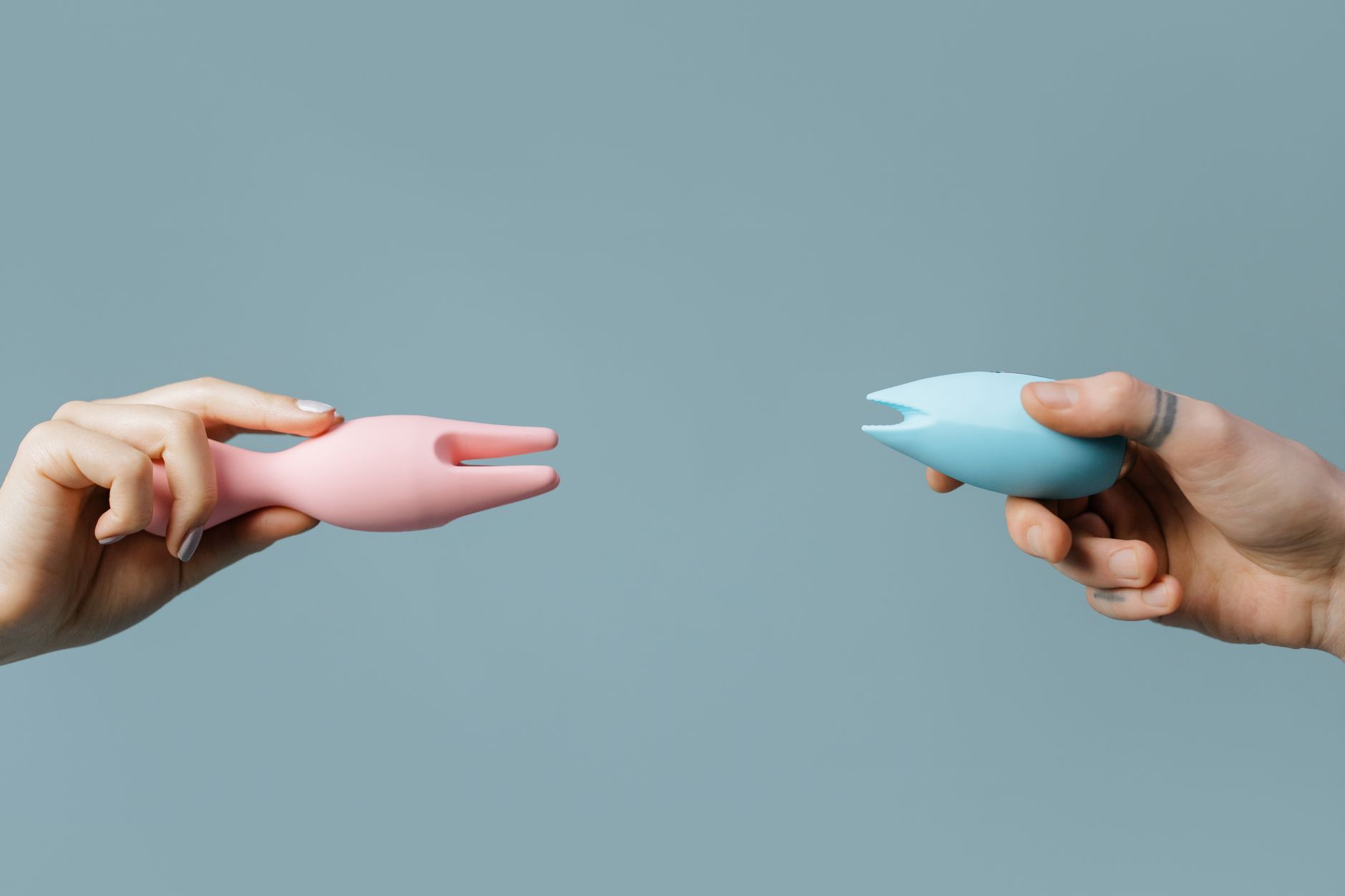
Lemon clitoral vibrators can actually help you here, but only if you use them as a tool for retraining your expectations, not for rushing toward a finish line.
Why the "speed" problem exists at all
There are three layers to this, and they're all worth naming.
Layer one: the biological mismatch. Traditional sex is built around male arousal and orgasm timelines. That's not judgment, it's just anatomical fact. People with vulvas typically need longer to warm up, and the path to orgasm doesn't look like a linear climb. It's more like a spiral. Suction-based clitoral vibrators like the lemon vibrator actually mirror this spiral better than anything else I've seen, which means they can actually slow you down, not speed you up.
Layer two: internalized performance scripts. We absorb messaging from porn, movies, locker room talk, and sometimes partners. The idea that good sex is fast, efficient, that multiple orgasms in quick succession prove something about you or your partner's skill. None of that is true, and it's exhausting.
Layer three: actual partner pressure or impatience. Sometimes the clock isn't in your head. Sometimes someone is literally checking their watch. That's a relationship problem dressed as a pleasure problem, and it needs a separate conversation.
What changes when you slow down
I'm not being poetic here. There's actual neuroscience. When you're rushing, your sympathetic nervous system (fight-or-flight) is competing with your parasympathetic system (rest-and-digest). You can't orgasm from a place of anxiety. Your body literally won't let you.
When you give yourself permission to slow down, something shifts. Your nervous system settles. Blood flow increases. Sensation becomes richer, not because anything external changed, but because your brain finally has the bandwidth to notice what's actually happening.
Clitoral vibrators work better when you're settled. A lemon sucker like the Lem creates suction and pulsation patterns that reward patience. If you're rushing, you miss the building sensations that lead to really deep, full-body orgasms. You just get surface-level ones, if you get them at all.
How to actually use a lemon vibrator to break the speed habit
Start with no goal except exploration. Not "I'm going to have an orgasm in five minutes." Instead: "I'm going to spend fifteen minutes seeing what this feels like." Set a timer if you need to. Give yourself permission for it to be that simple.
Use the lowest suction setting. This is crucial. The Lem and other lemon clitoral vibrators have multiple intensity levels. Lower settings require you to stay present. You can't zone out. Your attention has to follow the sensation, which actually trains you out of the rushing mindset.
Breathe deliberately. This is the fastest way to wake up your parasympathetic nervous system. Before you start, try this: inhale for four counts, hold for four, exhale for six. The longer exhale is the key. Do that for two minutes, then use your vibrator. You'll notice the difference immediately.
Let arousal build sideways, not upward. Instead of chasing peak sensation, spend time exploring medium-intensity pleasure. Notice what happens at level two or three. What happens when you shift angle slightly? What if you hold it still instead of moving it? This sideways exploration is where real pleasure lives, and it naturally takes longer.
The conversation you might need to have
If you're with a partner, sometimes the pressure you feel isn't self-imposed. If that's the case, you need to name it. Not accusingly, but clearly.
"I notice I feel rushed sometimes. That's on me to work through, but it would help if we could talk about building in more time for me to warm up. I actually enjoy this more when there's no time pressure."
A partner who loves you will get it immediately. If they don't, that's information too.
If you're solo, the conversation is just with yourself. You deserve unhurried pleasure. That's not selfish. That's actually the baseline for healthy sexuality.
Retraining your body's expectations takes time
You didn't learn to rush overnight, so you won't unlearn it in a session or two. I'd expect about four to six weeks of regular, intentional slow exploration before the nervous system really settles. That sounds like a long time, but it's actually the fastest way to genuinely change the pattern.
During those weeks, notice what shifts. Does arousal feel different when you're not watching the clock? Do orgasms feel different? What about your baseline mood or desire for sex later in the week?
Most people notice that they want sex more often, not less, once they remove the performance element. Turns out anxiety is a pretty effective libido killer.
When lemon vibrators become part of reclaiming your pace
Tools like the lemon clitoral vibrator work here because they're not about speed. They're about sensation and consistency. You could use any clitoral vibrator for this work, but suction-based devices have a particular advantage. They create a sealed sensation that rewards slowing down and paying attention.
The vibrator becomes a permission slip, in a way. "I'm using this to explore my own pleasure on my own timeline." That distinction matters.
FAQ: Pressure and pace
Why do I feel like I'm taking too long when I'm actually within normal range?
There's no "normal range" for orgasm. Cervical stimulation takes longer than clitoral. Some days take longer than others. Hormone cycling, stress, medication, how much sleep you got. All of it affects pace. But the real answer is: you learned early that faster means better, and that script is playing in the background. Rewriting that script requires awareness first, then intentional practice with slowing down.
Can lemon vibrators actually help me take longer, or do they just speed everything up?
They can go either way. A high-intensity setting on a clitoral vibrator might rush you toward orgasm. But a lower suction setting, used with intention, actually helps you build arousal more gradually. You're training yourself to notice the buildup instead of skipping past it.
What if my partner thinks taking longer is boring?
That's a compatibility or communication issue, not a you issue. A partner who finds your pleasure boring isn't a great fit. The right partner gets actively turned on by the fact that you're getting off, regardless of timing. If that's not your situation, that's worth examining separately.
Is it normal to feel antsy or restless when trying to slow down?
Completely normal. That's your nervous system protesting the new pace. Your body has learned to expect speed, so slowness feels strange at first. It's like learning a new sleep schedule. Uncomfortable initially, then natural. Stick with it.
How do I know if I'm genuinely not interested in sex, versus just running the performance script?
Stop having sex for one month with the explicit goal of only using a vibrator alone, with no orgasm target. Just explore. Notice what happens to your baseline desire. Most people find that removing performance pressure actually ignites interest they thought was gone.
Can I use a lemon clitoral vibrator with a partner if I'm worried about being slow?
Absolutely. It can actually help with communication. "I'd like to use this while we're together" gives you control over your own timeline. Some partners feel insecure about toys at first, which is worth talking through separately. But from a pure mechanics standpoint, a lemon vibrator works beautifully for shared pleasure.
The permission you're actually looking for
Here's what I want to tell you directly. Your pleasure doesn't owe anyone speed. Not your partner, not society, not some imaginary expectation you absorbed without even noticing.
Take as long as you need. Build arousal slowly. Use whatever tools help you stay present. A lemon vibrator can be one of those tools, but the real tool is permission.
And you already have that. You just needed to hear it.
References & Sources
Research on sexual response and arousal timing:
- Basson, R. (2000). The female sexual response: A different model. Journal of Sex & Marital Therapy, 26(1), 51-65.
- Kommor, M., et al. (2018). Female orgasm consistency correlates with longer duration of arousal. Journal of Sexual Medicine, 15(S6), 342.
Nervous system regulation and sexual function:
- Porges, S. (2011). The Polyvagal Theory: Neurophysiological Foundations of Emotions, Attachment, Communication, and Self-regulation. New York: W.W. Norton & Company.
- Kaplan, H. (1979). Disorders of Desire and Other New Concepts in Sex Therapy. New York: Brunner/Mazel.
Performance anxiety and sexual satisfaction:
- Wiegel, M., Meston, C., & Rosen, R. (2005). The female sexual function index (FSFI): Cross-validation and development of clinical cutoff scores. Journal of Sex & Marital Therapy, 31(1), 1-20.
For more on slowing down and rebuilding intimate connection with a partner, read about how to use lemon vibrators when you want deeper connection with your partner. If performance pressure is tied to sensation issues, how lemon vibrators help when pleasure feels muted or requires more stimulation might be relevant too. And if you're exploring solo without external pressure, how to use lemon vibrators when you're solo and want to explore without pressure dives deeper into that specific freedom.