Let's name what's actually happening here
You're having sex. Maybe it feels good physically. Your body responds exactly how it should. And then your brain whispers: "This isn't landing." That absence of emotional resonance, that sense of sensation without soul, is one of the most confusing experiences people bring to my office. Because by all conventional measures, nothing is wrong.
Here's the thing though: pleasure without emotional connection isn't a broken system. It's a signal. And lemon vibrators, specifically the kind that prioritize sensation with precision, can actually help you decode what that signal is telling you.
Why emotion and physical pleasure get untethered
There are a few reliable culprits.
Stress is the big one. When your nervous system is flooded with cortisol and adrenaline, your body can still orgasm. Your vagus nerve can still register the suction feedback from a lem vibrator. But your prefrontal cortex, the part of your brain that processes meaning and connection, gets shunted offline. You feel present in your body but absent from the experience.
Another common pattern: unresolved conflict with a partner. I work with couples regularly where the sex is technically fine, but there's an emotional wall in the room that no amount of physical stimulation can breach. That disconnection feels less like physical dysfunction and more like you're performing for a ghost.
Sometimes it's depersonalization. Trauma history, anxiety disorders, or prolonged stress can create a dissociative response where pleasure triggers a watching-yourself-from-outside-your-body sensation. Your clitoris gets stimulated, but "you" aren't fully in the room.
And sometimes it's just that lemon sexual toys, like any tool, require intentional use. Without that intentionality, you're just using a vibrator at a vibrator, and that emptiness is real.
How lemon clitoral vibrators help you reconnect
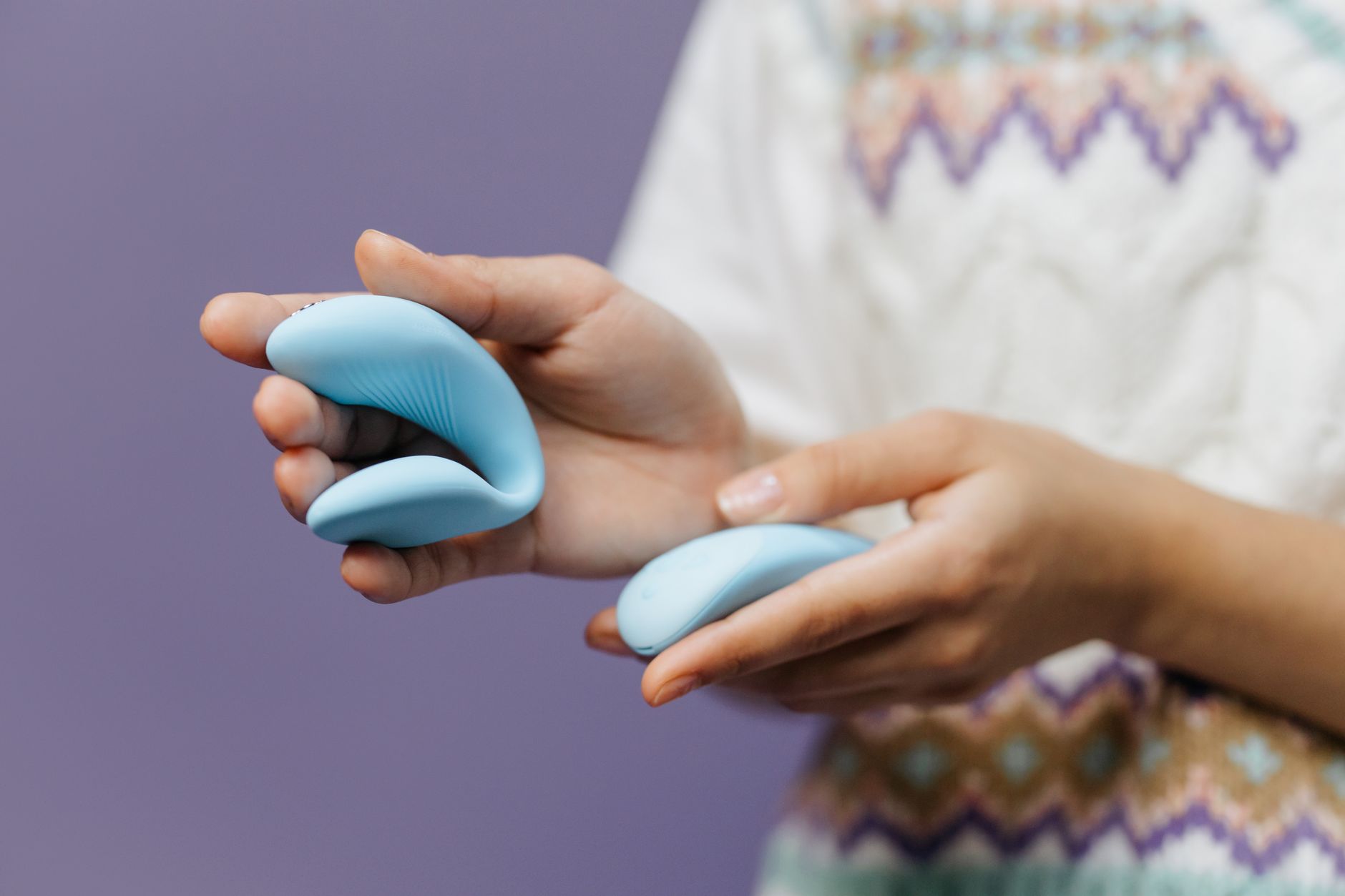
The suction-based design of a lem vibrator, the kind you'd find from Hallo Nancy's Lems, works differently than traditional vibrators. Instead of percussion against tissue, it creates a gentle suction that simulates oral stimulation. This matters for reconnection because the sensation is less aggressive and more integrated.
Here's why that helps: gentler stimulation often requires more attentiveness. You can't zone out as easily. The feedback loop stays tighter between your nervous system and your awareness. When you're using lower intensity patterns, especially in the 1-3 range, you're naturally drawn into noticing your own response rather than enduring it.
That's not mystical. That's neurology. A lemon clitoral vibrator's design invites presence. It's harder to be emotionally absent when the sensation is nuanced enough to require your attention.
The reconnection protocol
I recommend this approach to clients who want to rebuild the bridge between body and feeling.
Start solo. Emotional reconnection isn't a partnered problem; it's a you problem first. Spend time with yourself and a lem vibrator without the pressure of a relationship audience. Use it as a meditation tool, not a performance.
Slow down the narrative. Before you start, spend five minutes writing about what emotion you're hoping to feel. Not "I should feel turned on," but "I want to feel present" or "I want to feel like my body belongs to me." That intention matters. Your brain will organize the experience around whatever you're looking for.
Use pattern 1 or 2 exclusively. The most intense patterns feel good, but they also bypass the thinking brain faster. Stay in the gentler range where you have to actively pay attention to what you're enjoying. Intensity comes later, once the signal is clearer.
Check in with yourself every 2-3 minutes. Not to judge, just to notice. "Where am I right now?" Not physically. Emotionally. Are you present? Bored? Anxious? Learning to name the feeling while it's happening is the practice.
Do this for 10-15 minutes minimum. Not because you need to reach a specific outcome, but because emotional reconnection takes time. Your nervous system needs to shift from performance mode into curiosity mode. That takes about 10 minutes for most people.
What disconnection actually tells you about your relationship
If emotional disconnection is happening with a partner, a lemon vibrator is a useful solo tool. But it's not a fix for the relationship itself.
In my experience, when pleasure feels emotionally hollow, it usually maps onto one of three relationship patterns. Either there's unresolved conflict creating invisible distance. Or one or both of you are in survival mode and sex has become a task instead of a connection. Or there's a deeper intimacy gap that's been building for months or years.
Hallo Nancy's Lems makes beautiful tools. A lem vibrator can help you get to know your own pleasure language more fluently. But it can't repair the emotional work that needs to happen between you and another person.
That's a different conversation. Sometimes that conversation happens in my office. Sometimes it happens after one of you reads this post and says, "Actually, I think we need to talk about how disconnected I've been feeling." That's the conversation that matters.
Medication, mental health, and the disconnection trap
One more thing worth naming: if you're on SSRIs or other medications that affect sexual response, or if you're in the middle of a depressive episode, emotional disconnection during sex isn't a character flaw. It's a symptom.
I've worked with clients who used lemon vibrators successfully during depression recovery, but here's what actually changed the game for them: they got psychiatric support first. The medication adjustment, the therapy, the nervous system recovery. Then the lem vibrator became useful because they had the emotional bandwidth to actually use it intentionally.
If you're struggling with depression, PTSD, chronic anxiety, or any mental health condition that affects your sense of presence, talk to a therapist or psychiatrist before you assume something's wrong with your pleasure. Usually, the pleasure returns once the underlying condition gets treated.
When to bring a partner into the process
Once you've spent solo time getting familiar with your body's signals again, consider using a lemon clitoral vibrator with your partner present but not as the primary stimulation source.
This means you're still in control, still learning what your reconnected pleasure looks like. Your partner is witnessing that, which changes the nervous system dynamics. They're not performing or proving anything. They're just present.
That's often the bridge that matters most. Not what you do, but who gets to see you doing it. And that seeing, that witnessing without judgment, is what starts to rebuild emotional resonance.
Pleasure without presence is just sensation. Presence without pleasure is just anxiety. You need both. A lemon vibrator can help you find the presence part.
The practice, not the outcome
I want to be clear about something. Using a lem vibrator won't magically restore emotional connection if the relationship itself needs repair. It won't fix depression or anxiety without proper treatment. And it won't force you to feel something you don't.
What it can do is create the conditions for presence. It can slow you down. It can give your nervous system permission to pay attention instead of perform. And from there, the reconnection happens on its own timeline.
If you're experiencing persistent emotional disconnection during sex, especially if it's new and you can't trace it to obvious stressors, that's worth bringing to a therapist. Sometimes pleasure feels hollow because something in your nervous system needs attention. That's not a vibrator problem. That's a bigger-picture problem.
But if you're ready to experiment with what presence feels like, a lemon sexual toy like the Lem is a genuinely useful tool for that exploration. Start slow. Stay attentive. Let the sensation teach you something about what you actually want.
FAQ: Emotional disconnection and lemon vibrators
Can a lem vibrator fix relationship problems?
No. A lemon clitoral vibrator can help you reconnect with your own pleasure, which is valuable. But if the disconnection exists between you and your partner, that's a relationship conversation that needs to happen outside the bedroom. I'd recommend talking with a couples therapist or having a direct conversation about what feels emotionally absent.
Is it normal to feel nothing even when a vibrator feels physically good?
Completely normal. Your body's sensation system and your emotional connection system are separate neural pathways. Stress, depression, anxiety, medication effects, relationship conflict, and even just being distracted can keep those systems unlinked. The fact that you notice the gap is actually the beginning of fixing it.
How long does it take for emotional connection to return during sex?
It varies widely. Some people reconnect within a few weeks of solo exploration and nervous system settling. Others need months, especially if there's relationship repair or mental health treatment involved. There's no timeline. The practice matters more than the speed.
Should I tell my partner I'm using a lemon vibrator to work through this?
That depends on your relationship and communication style. Some couples benefit from that transparency. Others find it creates pressure. If you're using solo exploration as a way to get clearer about what you want emotionally in the relationship, that clarity will usually surface naturally in conversation. You don't have to announce the tool; you just gradually become more present.
What if I feel more disconnected after using a lemon sexual toy?
That can happen, especially if you're using it in performance mode or if you're not in a stable emotional place. If using a lem vibrator makes you feel worse, stop. Reconnection requires genuine curiosity, not forced outcomes. Talk to a therapist if the disconnection is persistent or worsening.
Can depression medication and lemon vibrators work together?
Yes, often well. Many SSRIs flatten sexual response, which can feel like emotional disconnection because the physical sensation is muted. That's a medication effect, not a relationship problem. Using a lemon clitoral vibrator can help you work with that flattened response and find pleasure in new ways. But the primary fix is usually a medication adjustment with your psychiatrist.