Here's what actually changes
Let's be real. Sensation shifts as we age. It's not that your body stops feeling pleasure. It's that the way sensation travels through your nervous system changes slightly. Nerve conduction slows. Skin becomes a touch thinner in some areas. Blood flow takes longer to respond. The clitoris itself doesn't shrink or disappear. The neural density stays mostly intact. What changes is the speed and intensity of the signal.
This is why some women report that vibration patterns they loved at 35 feel either too gentle or, weirdly, too intense at 55. Neither means something is wrong. It means your body's processing speed shifted. And that's actually useful information.
Why lemon vibrators work differently over time
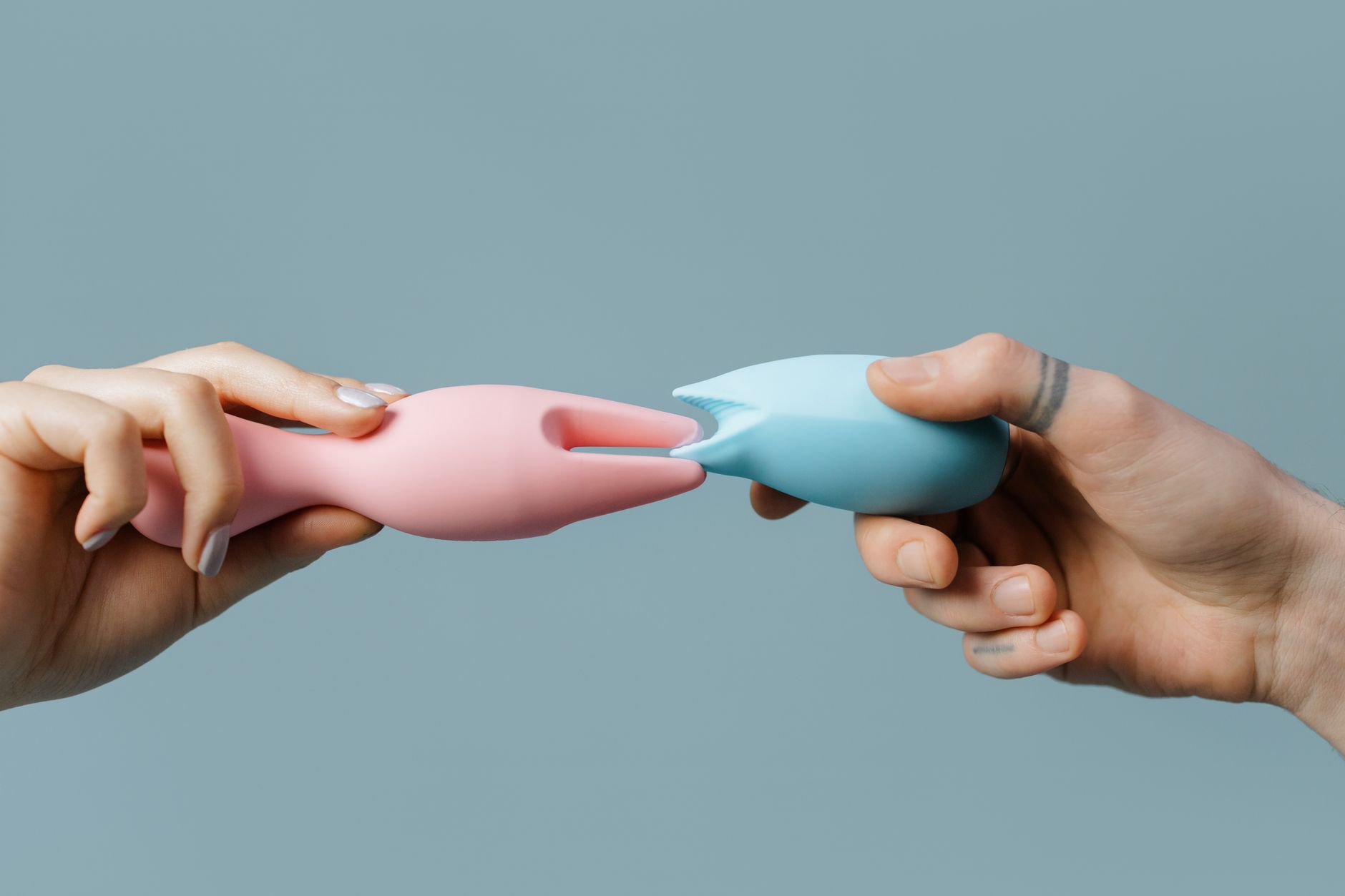
A lemon clitoral vibrator uses air-suction technology rather than direct vibration. This matters more as sensation changes because suction stimulates nerves without requiring the same level of contact pressure that traditional vibrators demand.
Think of it this way. A standard vibrator is like knocking on a door. You need the knock to be loud enough to register. A suction-based clitoral vibrator is like opening a window. The stimulation works differently, travels through different neural pathways, and often feels more integrated into your whole-body response rather than isolated to one point.
My clients over 50 describe lemon sucker devices as feeling "gathered" or "whole" rather than "pinpointed." That's because suction recruits more of the surrounding nerve tissue, including deeper structures that vibration alone might miss.
Photo by FounderTips on Pexels
The timing reset nobody talks about
As we age, arousal takes longer to build. This is almost never talked about honestly. Most people assume faster arousal is the baseline and interpret slower arousal as "something's broken." It's not.
Slower arousal gives you something genuinely useful. It gives you runway. More time to actually notice what's working, adjust pressure, change angle, explore. Instead of the rush-to-finish dynamic that younger bodies often create, you get something slower and often more textured.
When using lemon adult toys or any clitoral vibrator, budget 20 to 30 minutes instead of 10. Start on lower intensity. Let the suction work gradually. Many women find that what felt boring at pattern 3 five years ago now feels perfect because you're actually feeling the whole wave of sensation instead of chasing an immediate peak.
Intensity doesn't mean strength
This is the big misconception. When sensation changes, people assume "I need a stronger vibrator." Often the opposite is true. You need a vibrator that works differently, not harder.
A lem vibrator has pulse patterns and intensity levels. As nerve conduction slows with age, the right approach is usually to explore patterns rather than crank up strength. Pattern 2 or 3 at medium intensity often delivers more pleasure than pattern 1 at maximum because the rhythm is recruiting your nervous system more effectively.
I tell clients this directly. Stop thinking about vibration as something that needs to overcome your body. Think of it as something that invites your body into a specific rhythm. When you're younger, your nervous system catches up easily to any rhythm. As you age, sync and pattern matter more than pure amplitude.
Refractory periods and what to actually do about them
Refractory periods lengthen with age. For people with clitorises, this usually means longer gaps between orgasms. For people with penises, it can mean longer recovery time between erections or interest in additional rounds.
Here's what helps. Don't use that time to "get ready" for the next round. Use it to stay connected. Light touch, gentle stroking with the lemon sucker off but still in contact, or just holding each other. The goal is continuity of sensation without the intensity demand.
When you restart, you're not beginning from zero. You're building on already-activated nerve pathways. This often leads to longer, more integrated pleasure than the quick-reset-quick-go rhythm of younger years.
Partner dynamics shift (and that's actually good)
If you're with a partner, sensation changes create an unexpected opportunity. Your body's needs become impossible to ignore or skip. You can't just roll over because it's been five minutes. You have to slow down. You have to communicate. You have to actually pay attention.
Bringing a lemon clitoral vibrator into partnered sex when sensation is shifting serves a real function. It's not a workaround. It's a translation tool. Your partner learns what speeds and patterns work for you now. You learn whether you want more direct clitoral focus or more surrounding tissue stimulation. The vibrator becomes information, not a replacement.
Lubrication becomes more about comfort than mechanics
As estrogen drops and tissue thins slightly, lubrication matters less because you're "dry" and more because different lubes distribute suction differently. Water-based lubes feel lighter and allow more direct suction contact. Silicone-based lubes create a smoother glide but can reduce suction intensity.
If you're using a lemon sexual toy, start with a small amount of water-based lube on the device and on your skin. You want enough that the suction seal feels comfortable, not so much that it's sloppy. The goal is sensation, not lubrication for its own sake.
Many women over 50 find they actually need less lube than they did before because they've stopped expecting harsh friction and adjusted to gentler contact. Less lube means more direct nerve feedback.
When to experiment with positioning
As your nervous system's response pattern changes, positioning matters more. Some women find that lying flat with a pillow under the hips gives better sensory feedback than sitting upright. Others discover that kneeling changes the nerve angle in a way that makes everything feel new again.
This isn't about finding the "right" position. It's about understanding that your body works with gravity, blood flow, and muscle engagement differently than it did 20 years ago. What felt fine before might now feel either numb or slightly uncomfortable. What felt awkward before might now feel perfect.
When you're experimenting with lemon vibrators and sensation feels different, try three positions before deciding the device doesn't work. Often it's not the device. It's that your nervous system needs a different mechanical setup to process the signal.
The mental part matters more than you think
I've worked with hundreds of couples navigating pleasure shifts, and here's what I've learned. The biggest barrier isn't physical sensation. It's the story you're telling yourself about what sensation should feel like.
If you grew up with a particular model of arousal and orgasm, aging pleasure that doesn't match that model feels like loss. It isn't. It's different. Different can be deeper, slower, more integrated, more responsive to subtlety. But you have to actually want to explore it instead of mourning the old pattern.
When you bring a lem vibrator into this shift, you're essentially saying, "I'm open to finding out what works now." That openness matters neurologically. Anxiety and expectation literally slow down nerve transmission. Curiosity speeds it up.
FAQ: Sensation, Aging, and Lemon Vibrators
Does clitoral sensation actually decrease with age, or is it just slower?
Both, but they're different things. The clitoris maintains its nerve density well into old age. What changes is conduction velocity, which is the speed at which your nervous system transmits sensation. It's like the difference between a fast internet connection and a slower one. The content is the same. The delivery takes a beat longer. Some women also report that sensation feels "wider" or less sharply localized, which is partly reduced skin elasticity and partly how the nervous system processes sensation across a larger area.
Why do lemon vibrators feel different than regular vibrators as I age?
Air-suction vibrators engage the clitoris and surrounding tissue in a broader pattern than direct vibration. Direct vibration creates a focused point of stimulation. Suction creates a rhythmic expansion and contraction. As nerve conduction slows, the broader pattern often recruits your nervous system more effectively because it gives slower-moving signals time to propagate. It's not that the device is "stronger." It's that it works with how your nervous system processes information now, not against it.
Is slower arousal a sign I should see a doctor, or is it normal aging?
Slower arousal is normal aging, full stop. It's also worth mentioning to your doctor if it's accompanied by pain, complete loss of sensation, or dramatic changes in other areas (mood, sleep, energy). But slower isn't broken. Many people interpret the slowdown as loss when it's actually just a different timeline. If you're worried, mention it in a checkup. But don't assume slower equals dysfunction.
Can I use lemon vibrators the same way I did 10 or 20 years ago?
Technically yes, but why would you? Sensation changed. Your nervous system changed. Using the same technique from two decades ago is like wearing the same jeans from college. It might fit, but it's probably not the most comfortable choice. Spend a few weeks experimenting with different intensities, patterns, and timing. Your body will tell you what it wants now.
What if sensation feels too intense now instead of too numb?
This happens too, and it's usually about nerve sensitivity shifting rather than true hyperesthesia. Try lower intensities first, obviously. But also try different patterns. Sometimes a faster oscillation feels like too much, while a slower pulse with the same amplitude feels perfect. The lem vibrator's multiple patterns give you room to dial this in without buying new equipment.
Should I tell my partner that sensation is changing?
Yes. Not as a problem announcement, but as information. "My body's responding a bit differently lately, and I want to explore that together" opens a conversation instead of creating secrecy. If you bring a lemon clitoral vibrator into partnered sex, frame it the same way. You're collaborating on discovery, not fixing something broken.
The actual point
Sensation changes. That's aging. But changed doesn't mean ended. People often confuse slower with lesser, different with worse. The pleasure capacity of a 55-year-old body is wildly different from a 25-year-old body, but it's not diminished. It's often more integrated, more full-bodied, less reactive and more responsive.
When you use lemon sexual toys or any pleasure device while sensation is shifting, you're getting useful information about what your nervous system responds to now. That information is gold. Use it.
If you're navigating this shift with a partner, this is also a moment to rebuild intimate attention together. If you're exploring solo, it's a chance to get to know your own body in a new way. Either way, the shift is an opening, not a closing. You just have to be willing to walk through it.