
The thing nobody tells you about suction toys
You've probably heard that lemon vibrators work better for sensitive tissue or when you want something gentler than traditional vibrators. What you haven't heard is that your body's unique architecture means one person's perfect lemon clitoral vibrator is another person's "meh." The suction strength that makes one person orgasm in five minutes makes another person feel numb. Anatomy matters way more than most guides admit.
I'm going to walk you through how to find the right lemon vibrator for YOUR specific body, not some generic version of you.
Why body type actually changes the experience
Here's the physical reality. Your clitoral hood (the fold of skin covering the clitoris) has a certain thickness and tautness. Your clitoris itself is a specific size. The tissue around it has particular elasticity. When you use a suction toy like a lemon vibrator, all of these variables change how much of the toy's intensity actually reaches your nerve endings.
Think of it like this. If your clitoral hood is naturally fuller or thicker, you need a stronger suction pull to create that concentrated pressure sensation that makes suction toys work. If your tissue is delicate or if you're someone whose clitoris is naturally more internal, a medium setting might already feel overwhelming.
There's also the question of overall body composition. People with more adipose tissue in the vulva sometimes find that mid-range suction settings feel better than the lowest ones, because the tissue has more give. People with less cushioning might prefer to start lower and work their way up more gradually.
None of this means your body is "wrong." It means you need to know your own baseline before you buy.
The sensitivity spectrum and what it means
I use "sensitivity" to describe three overlapping things. First, how quickly your clitoris responds to stimulation. Second, whether direct pressure feels sharp or dull. Third, how easily you can feel overstimulated or numb out.
If you're someone who's always had quick, intense orgasms from external vibration, you probably have naturally responsive tissue. You might find that even a mid-range lemon vibrator on pattern one feels quite strong at first. That's not bad. It means you can explore the lower settings without needing to immediately jump to the highest power.
If you're someone who needs sustained pressure and longer warm-up time to reach orgasm, you might be using lemon vibrators differently. You're probably looking for a sustained suction pull rather than patterns, and you might gravitate toward the higher settings once your body warms up. This is equally normal.
The third camp includes people who've experienced desensitization from long-term vibrator use, hormonal shifts that changed their baseline responsiveness, or past experiences that made their nervous system more protective. If this is you, lemon vibrators can actually help rebuild sensation because the suction mechanism is fundamentally different from oscillation or vibration patterns. But you'll want to start conservatively and give yourself permission to increase slowly.
Size and shape considerations
A lot of people think all lemon vibrators feel the same because they're all roughly the same silhouette. Not really. The opening diameter, the curve of the rim, and the overall weight all shift how the toy sits against your body and how the suction sensation distributes.
If you have a naturally fuller vulva or if you prefer to be able to cover more surface area with a toy, you want to check the opening size. A larger opening often means more of your tissue fits inside the suction chamber, which can feel more enveloping and less pointedly intense. If you're someone with a smaller vulva or if you want hyper-focused sensation, a smaller opening concentrates the suction into a tighter zone.
The shape of the rim matters too. Some lemon vibrators have a flatter edge. Others are more rounded. If you have sensitive skin or if you bruise easily, a rounded rim might feel more forgiving during extended use. A flatter rim can sometimes create a sharper seal, which some people prefer because it feels more precise.
Weight is its own thing. Heavier toys feel more substantial and can be easier to control if you're holding them during solo play. Lighter toys are less tiring if you're using them for twenty minutes. There's no universal "better" here. But if you know you have a tendency to get hand fatigue, a lighter lemon sexual toy is worth prioritizing.
Pattern versus sustained suction preferences
One of the best features of lemon vibrators is that most of them offer multiple patterns in addition to sustained suction at varying intensities. But not everyone wants patterns.
If you're someone who orgasms most easily from consistent, unchanging stimulation, you probably want to focus on the sustained suction modes and find the strength that works for you. Patterns can feel distracting rather than building. You'll want to know upfront which models let you lock into a single setting without it cycling through.
If you like variety or if you find that your body gets used to one sensation and wants a shift to push over the edge, patterns are your friend. Some people use patterns for the first ten minutes to build arousal, then switch to sustained suction to finish. Others use different patterns to explore different sensations in one session. If this sounds like you, a lemon adult toy with diverse pattern options is worth the investment.
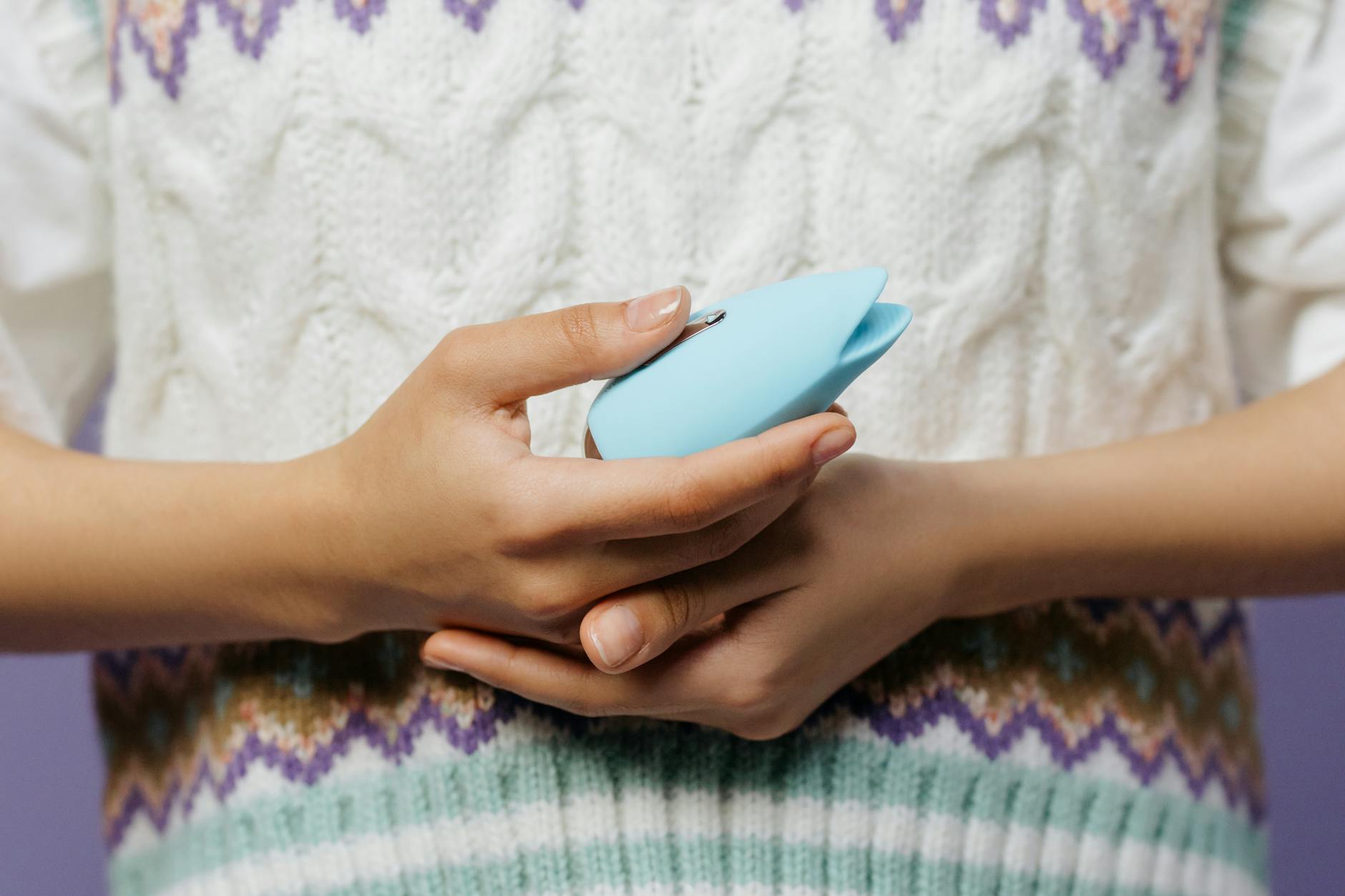
Photo by cottonbro studio on Pexels
The warm-up question
How long does it take your body to get aroused and responsive? This isn't about libido or desire. It's about physiological response time. Some bodies are quick responders. Others need a real runway.
If you're a quick responder and you jump straight into a strong lemon vibrator setting, you might accidentally overshoot into that uncomfortable numb-or-sharp territory. You'd probably benefit from starting lower and building intensity as sensation develops.
If you're someone who needs twenty minutes of warm-up before your clitoris really starts responding, a lower setting on a lemon clitoral vibrator might feel almost neutral for those first ten minutes. That doesn't mean the toy isn't working. It means your body's timeline is just longer. Once arousal builds, the same setting will suddenly feel completely different. The trick is not giving up during that runway phase.
One helpful approach: if you know you need warm-up time, use a lemon vibrator on a lower setting for the first fifteen minutes specifically to warm up, then bump the intensity once you feel a shift in response. Many people find this gentler than going hard and fast from the start.
Tissue thickness and where you are in your cycle
Hormonal fluctuations change how your clitoral tissue feels literally every week. During the first half of your cycle, when estrogen is climbing, tissue tends to be thicker and less sensitive. During ovulation, sensitivity peaks. After ovulation, as progesterone rises, tissue can feel a bit less responsive again.
This matters because it means your ideal lemon vibrator setting isn't static. If you're someone who tracks your cycle, you might notice that the intensity level you love during ovulation feels too strong during your period or during the luteal phase. That's not the toy's fault. That's your body communicating.
If you don't track your cycle but you notice that the same toy feels different on different days, you're probably experiencing these normal hormonal shifts. Rather than assuming you have the wrong vibrator, try testing different settings on different days and you'll probably find a pattern. Many people keep a lemon vibrator on hand because the adjustable intensity lets them dial up or down depending on where they are hormonally.
How to actually test before you buy
You can't exactly try a lemon vibrator in the store. But you can use these benchmarks to narrow down what's likely to work.
First, think about how you currently orgasm most reliably. Are you someone who comes from external pressure, internal pressure, or a combination? Do you need a specific rhythm or does a simple on-off work? Lemon vibrators primarily offer external suction and some use patterns for variation. If you orgasm almost exclusively from internal penetration, a lemon clitoral vibrator might not be your primary toy, though lots of people use them in combination with internal stimulation.
Second, recall how you've felt about previous vibrators. If you've tried a lot of traditional vibrators and found them too strong or overstimulating, start with a lemon vibrator's lower settings. If you've tried them and found them underwhelming, a lemon sexual toy might give you the different sensation you need. The fact that suction works through a completely different mechanism than vibration often means that someone who didn't love traditional vibrators finds lemon toys transformative.
Third, be honest about your hand strength and physical limitations. If you have arthritis or limited grip strength, a lighter lemon vibrator with an ergonomic handle is genuinely life-changing. If you have the hand strength but get bored easily, a model with multiple modes keeps things interesting.
Red flags that you picked the wrong match
You've bought the vibrator and you're testing it. Here's what should NOT happen.
Pain is a hard stop. Suction shouldn't hurt. If the opening doesn't fit your anatomy or if a specific setting feels genuinely painful rather than intensely pleasurable, that's your signal that this particular model isn't your match. Return it and try a different size or strength.
Complete numbness after just a few minutes also suggests the toy is too strong for your current baseline. Your tissue shouldn't go from responsive to nothing. If that's happening, you probably need a model with lower starting settings.
Bruising or visible irritation after use is worth attention. A little redness is normal. Actual bruising usually means either the seal is too tight (try adjusting how you're holding it) or the intensity is too high for your tissue. Dial back and see if that helps. If not, the toy might not be the right fit.
Just feeling "meh" after a couple of uses is different from those things. Meh can mean you need to adjust settings, spend more time warming up, or find the right pattern. Give it at least a week of experimentation before deciding it's wrong for you.
FAQ
Are lemon vibrators better for sensitive clitorises than traditional vibrators?
Lemon vibrators use suction instead of oscillation, which creates a fundamentally different sensation. For some bodies and tissue types, this feels gentler and more precise. For others, it's just different, not necessarily better or worse. If you have a sensitive clitoris specifically because your tissue is thin or responsive, you might find that a mid-range lemon vibrator's suction feels less harsh than high-frequency vibration. If your sensitivity comes from nerve damage or trauma responses, start conservatively with any toy and let your body adjust at its own pace.
How do I know if I should start on the lowest setting?
Start on the lowest setting if you're new to suction toys, if you've experienced desensitization from previous vibrator use, if you're rebuilding sensation after hormonal changes or medication side effects, or if you have a history of overstimulation. You can always increase intensity. You can't un-feel an intensity that's too much. Give yourself at least a few sessions at a lower setting before moving up. Your tissue adapts.
Can I use a lemon vibrator if my clitoris is more internal?
Yes, but adjust your expectations. External suction toys like a lemon vibrator work best when there's tissue to work with externally. If your clitoris is naturally more internal or recessed, you might feel more sensation from a vibrator that can reach further internally, or you might use a lemon vibrator in combination with internal stimulation. Some people with more internal anatomy love lemon vibrators as part of a duo-toy approach. Try it and see, but know that external suction alone might not be enough.
What if I want to use a lemon vibrator with my partner?
The size and intensity you choose changes if it's partner play versus solo play. If you're using it together, discuss what sensation you want before you start. A partner might hold it differently than you would, creating a different angle or pressure. You might want a stronger model than you'd use solo so that you have more control over intensity during partnered exploration. Talk openly about what you're going for.
Does my body type change over time?
Absolutely. Hormonal shifts, aging, pregnancy, pelvic floor changes, and even long-term vibrator use all affect how your tissue responds. A lemon vibrator setting that was perfect five years ago might need adjustment now. This isn't about your body being "wrong." It's about your body changing, which is normal. Revisit your settings periodically and adjust as needed.
How do I know if I have a thicker or thinner clitoral hood?
You can't really observe this precisely yourself without a mirror and some anatomical knowledge. But here's a practical shortcut. If you've always found that very intense vibration feels sharp or uncomfortable, you likely have thinner tissue or a more exposed clitoris. If you've found that even strong vibrators feel dull and you need a lot of pressure to feel much, you might have thicker tissue or more cushioning. A lemon vibrator's adjustable suction lets you dial in what actually works rather than guessing. Use the toy across a range of settings and notice which feels best. That tells you what your body needs.
The actual strategy
Picking the right lemon vibrator for your body isn't about fitting into a category. It's about being honest with yourself about how your specific body responds to stimulation, what your anatomy looks like, and what you actually want from a toy. Then matching those three things to a model that supports them.
Start with a lower intensity setting. Spend a few sessions exploring before you decide if you need more or less. Pay attention to how your body feels at different times in your cycle. Let yourself adjust as needed. Your perfect lemon vibrator match might be different from your best friend's perfect match, and that's exactly how it should be.
Want to dig deeper into how lemon vibrators work with your unique body? <a href="/contact">Reach out</a> — we can talk through your specific situation.