Here's the thing about solo and partnered pleasure
They're not the same experience. Your body knows it. Your brain definitely knows it. When you've spent months or years exploring pleasure alone, the muscle memory is real. Your hand, your timing, your rhythm, the exact pressure you need, the exact moment you want to build. Then a partner enters the picture again, and suddenly you're translating a language you've perfected into one you both need to learn together.
It feels awkward sometimes. That doesn't mean something's wrong. It means you're in transition.
Let's talk about why that transition can feel harder than you expected, and how a tool like a lemon clitoral vibrator can actually ease the shift instead of complicating it.
What changes when you go from solo to partnered
You've probably noticed your solo routine got really efficient. You knew exactly what worked. Maybe you'd spend 20 minutes building arousal through a specific sequence. Maybe you'd start on setting two of your vibrator, then move to setting five at the moment of peak arousal. Maybe there's a particular angle or position that gets you there every single time.
Here's what happens with a partner: you're suddenly managing someone else's rhythm, someone else's energy, someone else's expectations. Your nervous system is tracking two bodies instead of one. Your brain is split between sensation and connection, between what feels good and what feels vulnerable, between what you want and what you think they want.
That's a massive cognitive load. And it means your body's arousal response often flattens. Not because anything's broken. Because you're in a different mode entirely.
Why lemon vibrators bridge that gap better than you'd think
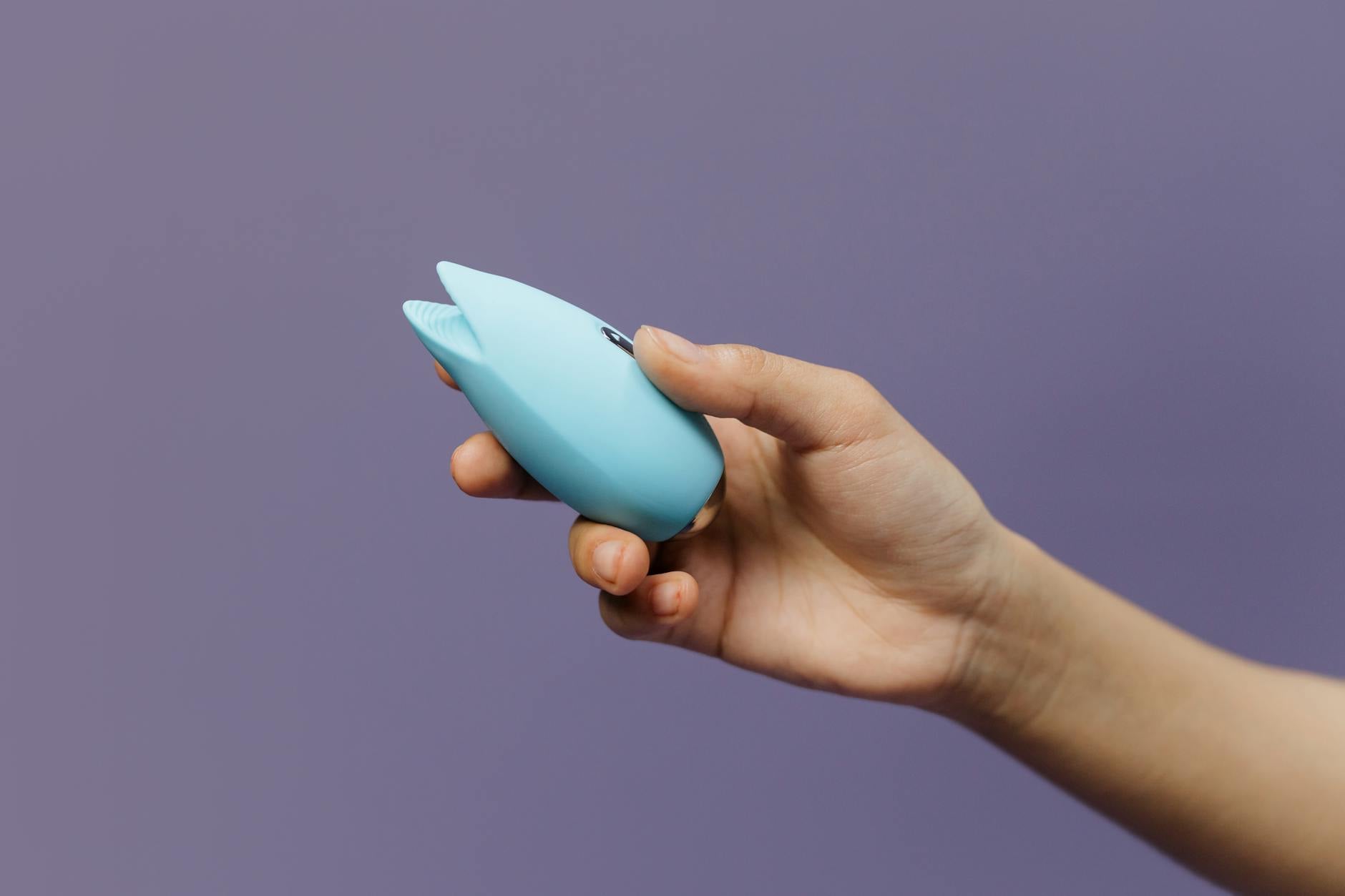
A lemon clitoral vibrator isn't a workaround. It's actually a translator.
When both of you use a lem vibrator together, something shifts. It's no longer "your pleasure" versus "partnered pleasure." It becomes a shared tool. You're both learning its patterns together. You're both discovering what feels good in real time with another person present. The suction stimulation from a lemon vibrator gives you consistent sensation you can rely on, even when everything else feels uncertain.
This matters because it removes the performance anxiety that often tanks partnered sex after a solo period. Instead of worrying whether your partner can replicate what your fingers or your usual toy did, you both get to explore something new together. There's less comparison. There's more discovery.
Plus, the pressure and sensation profile of a lem vibrator is different enough from solo touch that it doesn't feel like a direct replacement of your solo routine. It feels like something fresh. Something the two of you are learning together.
The practical framework that actually works
Three things I suggest to couples navigating this transition:
Start with your own pleasure first.
Introduce the lemon vibrator solo for a few weeks before bringing it into partnered time. Get comfortable with the sensations. Figure out which settings you like, which angle works best for your body, how long it takes you to reach orgasm with it. This sounds counterintuitive when you're trying to transition to partnered sex, but it actually accelerates the process. You're reducing variables. You're not trying to learn a new tool AND re-enter partnered sex at the same time.
When your partner eventually joins, you'll have baseline knowledge. You can say "I like setting three" instead of both of you fumbling in the dark.
Name what you're nervous about.
Is it that your partner won't be able to touch you the way you touch yourself? That they'll feel replaced by the toy? That you've gotten too used to solo pleasure and can't transition back? That they expect you to orgasm the same way you used to, years ago?
Each of those is a different conversation. They can't be solved by the right toy. They can be solved by talking, and then the toy becomes something that supports what you've already discussed.
Build partnered pleasure with the vibrator as part of it, not all of it.
You've read the advice: "Use the toy during foreplay." Sure. But what usually works better is seeing the vibrator as one element of a larger experience. Your partner touches your breasts while you use the lem. You use the vibrator while they're inside you. You hold the vibrator while they kiss you. The goal isn't to hand them the vibrator and expect them to replicate your solo session. The goal is for you to experience pleasure while they experience being part of your pleasure. That's genuinely different.
When to introduce the tool, and when not to
Timing matters more than you'd think.
If you're in the early stages of reconnection, and you and your partner have just started touching each other again after a long time apart, introducing a lemon vibrator immediately can feel like you're jumping ahead. Give yourselves two to four weeks to rebuild touch and presence without it. Let your bodies remember each other. Then introduce the toy from a place of abundance, not a place of "we're not working so we need to fix it with this."
But if you've already started having sex and something feels off.if you're not reaching orgasm the way you did solo, if there's tension between you about desire, if your partner wants to understand what you need.then the lem vibrator is a tool that actually helps you both have a clearer conversation.
One more thing: if your partner is nervous about toys (which is still weirdly common), don't surprise them with it. "I've been thinking about trying something together" is a conversation starter. Asking what they're worried about, whether it's about adequacy or about feeling like they've failed somehow, actually matters. Nine times out of ten, the worry isn't about the toy itself. It's about what they think the toy means about them. Address that first. The vibrator becomes less charged once you've done that work.
The emotional piece is bigger than the physical one
Honestly, this is why I want to circle back. The transition from solo to partnered sex after a gap isn't primarily a physical problem. Lemon vibrators don't solve emotional disconnection or communication breakdowns. They can support the process, but only if you're both actually interested in reconnecting.
If you're using the vibrator to avoid talking about whether you want to be together, or whether you're actually attracted to each other anymore, or whether the relationship can hold what both of you need.then the vibrator isn't the answer. Therapy is.
But if you're both genuinely trying to rebuild intimacy after a solo period, and you just need a bridge tool while you're relearning each other's bodies and rhythms, then a lemon clitoral vibrator becomes exactly what it should be: a shared exploration instead of a solo experience, something that says "let's figure this out together."
Making the conversation easier
If you're not sure how to bring this up, here's a template:
"I've been thinking about us, and I want to rebuild what we had. I know we're both finding our rhythm again, and I want to try something that might help both of us feel more connected. There's a tool I've been curious about." Then you show them. Let them ask questions. Don't oversell it. Just be honest about what you're trying to do: reconnect, rebuild pleasure, figure out what works for both of you now.
Most partners respond better to that honesty than to anything else.
FAQ: What people actually ask about this transition
Will using a lemon vibrator make it harder for my partner to satisfy me without one?
Not if you're strategic about it. You're using the lem as a tool within your partnered sex, not as a replacement for manual touch. In fact, alternating between your partner's hands and the vibrator actually keeps your nervous system from depending too heavily on any single sensation. Your clitoris stays responsive to varied input.
What if my partner feels insecure about the vibrator?
That's a sign you need a conversation before the toy arrives. Ask them what they're worried about. Usually it's about inadequacy, not actually about the toy. Let them know the vibrator isn't a replacement. It's a supplement. It's something you're exploring together. Offering to use it together, or to have them control it, can help them feel less left out.
How long does it usually take to readjust to partnered sex after a solo period?
This varies wildly. Some couples click back in within weeks. Others take months. If you're not feeling connected after three months of trying, that's worth discussing with a therapist. It might not be about the transition period itself. It might be about deeper incompatibility or unresolved tension.
Should I tell my partner about my solo routine before introducing the vibrator?
Yes. Not graphic details. But something like "I've found some patterns that work really well for me alone, and I want to figure out how to bring some of that into what we do together." Transparency removes the mystery that can make partners feel threatened.
Can I use a lemon vibrator during partnered sex if I've never used one solo?
Absolutely. You're both learning together. Just go slow. Start on lower settings. Let yourself get comfortable with the sensation with another person present. It might feel different or more intense than you expect because your nervous system is in a different mode when you're with a partner.
What if the lemon vibrator doesn't help and things still feel off?
Then you've got useful information. The issue probably isn't physical. It's relational. Consider talking to a couples therapist who specializes in intimacy. A good one can help you both understand what's actually blocking reconnection. The tool is never a substitute for that conversation.
The larger point
You're not broken because the transition from solo to partnered feels awkward. You're human. Your body and brain are genuinely trying to manage two different modes of pleasure at once. A lemon clitoral vibrator can be a useful bridge, but only if you're both willing to talk about what the transition actually requires: patience, honesty, curiosity about what works now (not what worked five years ago), and real commitment to rebuilding together.
That's the work. The vibrator is just the tool that makes the work a little easier.