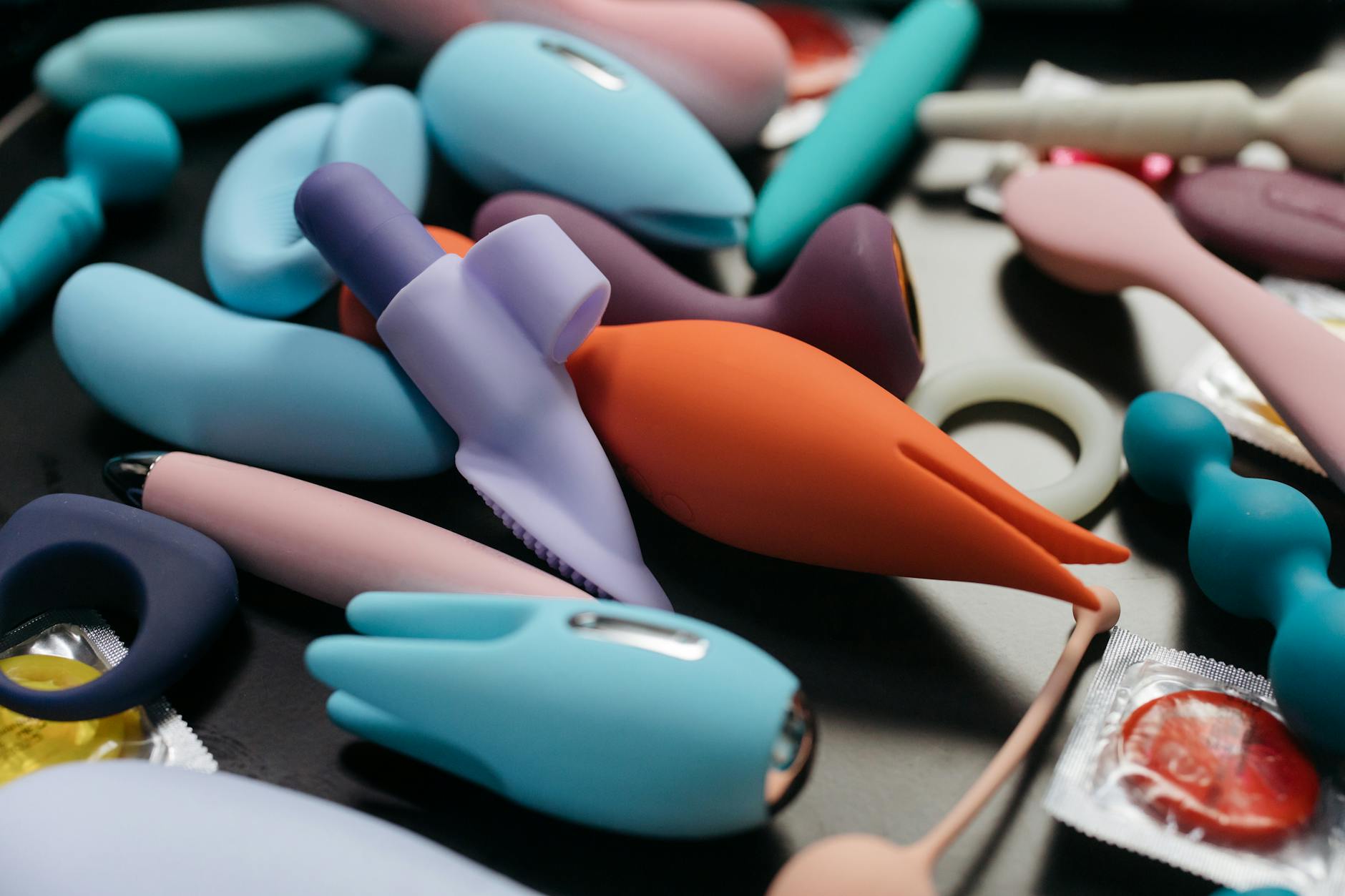
Let's start with what's actually happening
After a long relationship ends, solo pleasure doesn't feel like it used to. That's not a personal failing. That's neurology. Your brain spent years calibrating arousal around another person's presence, their touch, their rhythm. You got used to being someone's partner first and your own person second. Shifting back to solo exploration isn't automatic. It's recalibration.
Here's the part nobody tells you: this is actually an opportunity.
Why the transition feels weird (and why that's normal)
Three things happen at once when a long relationship ends. First, the physical routine vanishes. No partner means no automatic sexual contact, which means your body isn't primed for arousal the same way. Second, the mental load shifts. You're not performing for anyone anymore, but you're also not riding the momentum of someone else's desire. You have to initiate for yourself. Third, there's often this low-level grief sitting underneath everything, even if the relationship needed to end.
Most people I work with describe this phase as feeling weirdly numb. Not depressed exactly. Just... disconnected. The body's there, but the interest isn't firing up the way it used to.
This is where a lot of solo exploration stalls. People try their old toys, feel nothing, assume they've broken something in themselves, and stop trying. None of that is true. Your nervous system just needs a different tool to reset.
Why lemon vibrators are different for this transition
Traditional vibrators work by delivering consistent, often intense stimulation. That's great if your nervous system is already warmed up. It's not great if you're trying to wake something up from a sleep state.
Lemon clitoral vibrators like those from Hallo Nancy's Lems use air-suction technology, which mimics the kind of stimulation your body responds to instinctively. It's not the direct buzzing pressure of a traditional vibrator. It's a gentle pulling sensation that builds arousal gradually instead of demanding it all at once.
For someone returning to solo pleasure, that difference is huge. You're not fighting your nervous system into submission. You're inviting it to participate.
The actual steps for relearning your body alone
Start without the toy. Spend a week or two touching yourself without any vibration at all. This isn't about achieving anything. It's about reconnecting with the sensation of your own hands on your body. Notice what feels good. Notice where you like pressure, where you like softness. Write it down if that helps.
Then introduce the toy on the lowest setting. Use a lemon vibrator like the Lem on pattern 1 or 2. Spend 15 to 20 minutes just exploring. No goal. No finish line. This is sensory data collection.
Build from there. Each session, spend a little longer with the toy. Gradually increase intensity as your arousal builds naturally. The point is that you're learning your own body's rhythm again, not matching anyone else's.
Create a space that's just for you. This matters more than you'd think. During a partnership, sex often happened in a shared bed at a shared time. Solo exploration needs its own context. That might be a specific room, a specific time of day, a specific playlist. Something that signals to your nervous system: this time is mine.
The emotional work underneath
Rediscovering solo pleasure after a long relationship is partly physical recalibration and partly emotional permission. Your brain probably still has some old messages running: that pleasure should be partnered, that self-pleasure is a consolation prize, that touching yourself is what you do when you're not in a "real" relationship.
None of that is true. Your pleasure matters on its own. Not as a backup plan. Not as a stepping stone to partnered sex someday. Right now, in this moment, your solo sexuality is complete on its own.
That's genuinely hard to internalize if you spent years in a partnership. Give yourself grace while you're relearning.
How this actually improves partnered sex later (if you want it)
Here's something that often surprises people. When you spend time genuinely exploring your own body, without performance pressure, and with a tool that respects your nervous system's pace, your future partnered sexuality gets better. Not because you practiced. Because you remembered what your actual preferences are.
Most people entering a new partnership have no idea what they actually like. They know what worked with their ex. They know what they assumed they should like. They don't know what their body is actually asking for. Solo time with a lemon vibrator clears that up fast.
The practical realities nobody mentions
You might feel lonely while doing this. That's okay. Loneliness and solo pleasure can exist in the same moment. That doesn't mean something's wrong.
You might feel like you're grieving during the process. You probably are, a little bit. Loss and reclamation can overlap.
You might discover that your preferences have actually changed. That's information. Use it.
You might find that you genuinely prefer solo exploration, and that's valid too. There's no required timeline for getting back into partnered sexuality. Your pleasure belongs to you.
When to reach out for support
If you're feeling completely numb six months in, or if every attempt to explore feels painful rather than neutral or pleasurable, check in with a therapist. Sometimes post-breakup numbness is a nervous system response that needs extra support, not just time.
If you're cycling between intense sessions and complete avoidance, that's worth noticing too. That pattern often points to some guilt or shame that's still active underneath.
Most people work through this phase on their own, using tools like a lemon vibrator to gently guide their nervous system back online. But there's no weakness in asking for help if it's not moving on its own.
The actual goal here
Rediscovering solo pleasure after a long relationship isn't about replacing what you had with a partner. It's about remembering that your body was yours before the relationship and it's yours now. A lemon clitoral vibrator isn't a replacement for a partner. It's a tool for you to remember what your own desire actually feels like, on your own timeline, without anyone else's rhythm in the mix.
That's the real work of this phase. Not getting back to sex. Getting back to yourself.
FAQ
How long does it usually take to feel interested in solo pleasure again after a breakup?
There's no standard timeline. Some people feel ready to explore within weeks. Others need several months for their nervous system to settle enough to experience arousal. If you're pushing yourself and it doesn't feel good, that's information. Give yourself more time. If six months have passed and you're not feeling any shift, that might be worth talking through with someone trained in relationship transitions.
Is it normal to feel guilty while exploring solo pleasure after my relationship ended?
Completely normal. Your brain probably has some old programming about what solo pleasure "means" in the context of a breakup. Maybe it feels selfish. Maybe it feels like infidelity to a relationship that's already over. Maybe it just feels weird to prioritize your own pleasure when you're used to prioritizing your partnership. All of that is workable. Naming the guilt is the first step.
Should I tell my therapist that I'm using a lemon vibrator to help with this transition?
If you have a therapist, yes. This is part of your healing process. A good therapist will normalize this completely. This is part of reclaiming your body and your autonomy. It's actually a healthy sign that you're taking active steps to reconnect with yourself.
Can using a lemon vibrator too much make it harder to feel pleasure naturally again?
No. Unlike traditional vibrators that can create numbing with repeated intense stimulation, lemon vibrators using air-suction technology are designed to work with your body's natural responses rather than override them. The point of starting with lower settings and building gradually is exactly to keep your sensitivity intact. You're retraining your arousal response, not damaging it.
What if I'm not interested in partnered sex ever again after this?
That's completely valid. Solo exploration might clarify that you actually prefer self-partnered sexuality, and that's a legitimate choice. There's no requirement to get back into partnered sex. Your pleasure is yours to define.
How do I know if I'm ready to explore with a partner again?
You'll probably know because the idea will feel generative instead of scary. You'll have some sense of what you actually like from your solo work. You won't be doing it to fill a void or because you think you "should." The timing is individual, and pushing it creates more problems than it solves. If you're uncertain, that's usually a sign you need more solo time first.
References
Gottman, J.M., & Silver, N. (2015). The Seven Principles for Making Marriage Work. Crown Publishers.
Perel, E. (2018). The State of Affairs: Rethinking Infidelity. HarperCollins.
Breuner, C.C. (2017). American Academy of Pediatrics Healthy Sex Talk. American Academy of Pediatrics.
Barbach, L., & Geisinger, D.L. (1983). Going the Distance: Finding and Keeping Lifelong Love. Doubleday.