
Here's the thing about new partner sex
There's a quiet anxiety that shows up when you're starting to have sex with someone new. Not the good kind of nervous. The kind where you're mentally narrating your own performance while it's happening, monitoring every breath and angle, wondering if they're enjoying themselves, worrying that you're taking too long or moving too fast or that something you do will make them want to leave.
That internal monologue kills intimacy before it has a chance to develop.
The best antidote I've found isn't more communication (though that helps) or more time (though that definitely helps). It's a shift in what pleasure looks like together. And lemon vibrators create that shift faster than almost anything else.
Why new partner sex is actually hard
You already know each other's bodies physically. But sexually? You're reading a language you don't fully speak yet. Where does your partner like to be touched. How quickly do they get aroused. What brings them pleasure versus what feels meh. What they fantasize about versus what they're willing to say out loud.
For people with vulvas especially, there's an added layer: the pressure to orgasm on someone else's timeline. New partners often haven't learned the patience that matters. They're enthusiastic, sometimes too enthusiastic, and the harder you try to come, the more it locks up your nervous system.
For people with penises, it's often the opposite pressure. Performance anxiety, rushing, the fear that you're not hard enough or lasting long enough or making it good enough.
Both of these spirals get worse when you're trying to figure out someone new. You don't have a foundation of trust yet. So you compensate by over-functioning, over-performing, over-thinking.
What lemon vibrators actually change
The moment you introduce a device into partnered sex, the dynamic shifts. Suddenly it's not just about what your body can do. It's about what you discover together.
When you use a lemon clitoral vibrator with a new partner, three things happen almost immediately.
1. Performance pressure lifts. The toy becomes the focus, not your partner's perceived competence. If arousal takes longer, the device fills that time. If orgasm feels far away, the suction-based stimulation does the work without anyone feeling like they're failing. Your partner isn't carrying the entire responsibility for your pleasure anymore. That's profoundly freeing.
2. Vulnerability feels safer. Asking for a toy requires a conversation. "I'd like to try this with you" is different from silently hoping your partner will figure out what you need. That conversation is the actual intimacy-building moment. You're saying out loud: I trust you enough to ask for what I want. And that trust is what deepens the connection.
3. Pleasure becomes collaborative. You're not having sex at each other anymore. You're building something together. A lemon vibrator from Hallo Nancy's Lems becomes a tool you both explore, not a replacement for your partner. Your partner can watch what makes you come alive. They can feel your responses. They can be the one to control the intensity or rhythm. Suddenly they're not anxious about their own performance because they're focused on yours.
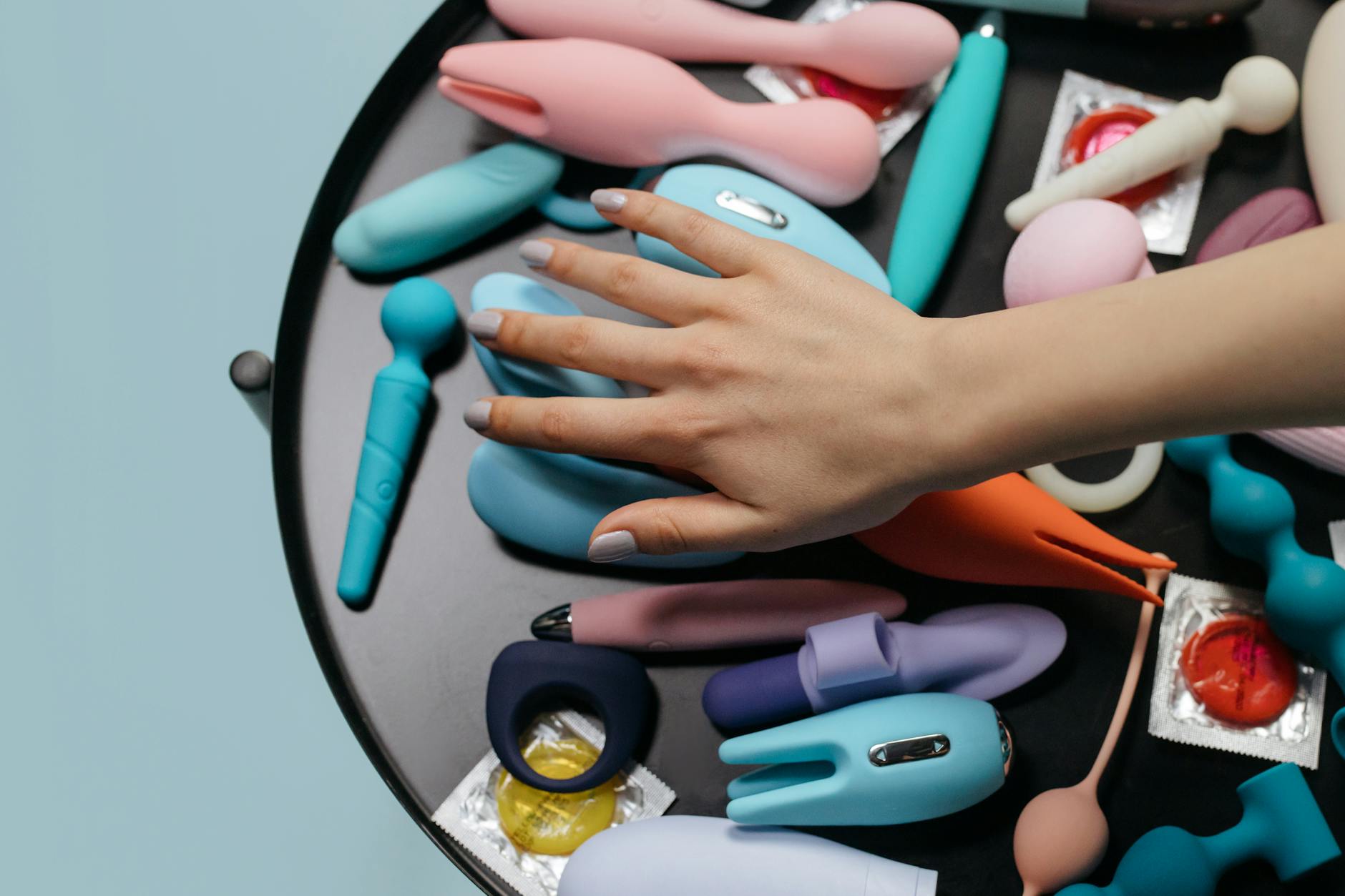
Photo by cottonbro studio on Pexels
How to actually bring this up
Honestly? The conversation is easier than you think. You don't need to wait for some perfect moment. It works best when it's low-stakes and practical.
Something like: "I've been using a lemon clitoral vibrator on my own, and it feels amazing. I'd love to try it with you sometime if you're into that." That's it. You're not making it weird. You're not apologizing. You're not framing it as a fix for something broken. You're just inviting them into something that works for you.
Most new partners respond with curiosity rather than rejection. Sex with someone new is already vulnerable. Adding a tool that enhances pleasure often feels like an obvious next step, not a threat.
If they seem hesitant, you can ask what's coming up for them. Sometimes partners worry that a toy means they're not enough. That's worth a genuine conversation: "This isn't about you not being good enough. It's about adding something that feels even better for both of us." Because lemon sucker toys do make it better for both of you. Your partner gets to see you fully satisfied. They get to be part of creating that. That's genuinely hot.
The first time you use it together
Slow down. You don't need to rush into penetration immediately. Start with foreplay where you're both focused on the vibrator and your response to it. Let your partner explore how different patterns affect you. Have them start at lower intensities and work up.
This serves two purposes. One, it builds anticipation for both of you. Two, it gives your new partner real-time information about what actually works for you. You're teaching them your body, and you're doing it through pleasure rather than instruction.
Most lemon vibrators, including our design at Hallo Nancy's Lems, use suction-based technology instead of traditional vibration. This means the stimulation feels less intense on sensitive tissue and builds sensation gradually rather than overwhelming your nervous system immediately. That's different from what a new partner might be used to, so it actually levels the playing field. You're both learning how this works together.
After the vibrator gets you to the edge, you can introduce penetration if that's part of what you both want. Or you can come with it and then shift focus to their pleasure. The point is that you've already experienced real satisfaction, so there's zero pressure on what happens next.
Why this matters for building a real foundation
Early-stage sex is where patterns get set. If you spend the first few months faking satisfaction or white-knuckling your way to orgasm or hiding your actual desires, that's the foundation you're building on. Your nervous system learns not to trust pleasure. Your partner learns that you're easy to satisfy (or hard to satisfy, which creates its own pressure). The relationship gets organized around performance instead of genuine connection.
When you bring a lemon vibrator into early partnered sex, you're saying something different. You're saying: I want real pleasure here. I'm willing to ask for what that looks like. I trust you enough to show you what I need. And I want you to feel good doing it.
That's actually the foundation that lasts. Trust. Communication. Shared pleasure. Real vulnerability.
New partner sex doesn't have to be the performance anxiety Olympics. It can be the beginning of genuine intimacy if you're willing to ask for what you actually want.
What about different styles of lemon vibrators
If your new partner is also exploring lemon clitoral vibrators for the first time, having a conversation about which style might work is itself an intimacy builder. Do they like quieter devices? Faster patterns? Longer battery life? These small preferences matter.
The Lem, Hallo Nancy's Lems' flagship lemon vibrator, has become a go-to for couples because it's intuitive, has a learning curve that's actually fun to explore together, and the suction technology feels genuinely different from what most people have tried. But the specific toy matters less than the fact that you're choosing together.
When to talk about it beforehand
Some new partners want a heads-up before it happens. Others prefer the surprise. You know your person better than anyone else does. The key is just to check in: "Would you rather I mention this before we get into it, or does it matter?"
If they want the conversation first, that actually gives you even more runway to build anticipation. You can talk about it before the moment arrives, which gives both of your nervous systems time to settle into curiosity instead of surprise.
If they prefer no warning, that's fine too. Just keep the first introduction light and playful. This isn't a big production. It's just adding something to what you're already doing together.
The deeper thing that happens
Here's what I see in my practice after years of working with couples: the moment someone is willing to say "This is what actually brings me pleasure," something shifts in the relationship. Vulnerability becomes real instead of theoretical. Trust becomes practical instead of assumed.
Lemon vibrators accelerate that because they make pleasure visible. Your partner can see what makes you come alive. They can feel your response in real time. That's the foundation that deeper intimacy gets built on.
New partner sex doesn't have to be anxiety-producing. It can be exactly what it sounds like: the beginning of something that might be really good.
People also ask
Will introducing a toy too early make my new partner feel inadequate?
Not if you frame it right. The difference is between "You're not good enough, so I need this" and "This is what feels amazing for me, and I want to explore it with you." The second one is actually a compliment. You're trusting them with your pleasure. You're inviting them to be part of something that matters to you. Most secure people respond to that with genuine interest.
How soon into dating is too soon to bring up lemon vibrators?
When sex becomes part of your relationship, that's the right time. You don't need to introduce the idea before you're already intimate. But also, you don't need to wait months. If you're having sex regularly and it feels good, that's the moment. There's no magic timeline. Just don't present it as a solution to a problem. Present it as an enhancement to something that's already working.
What if my partner wants to use it but doesn't want me to use one with them?
That's actually pretty common early on. Some people need more time to feel comfortable receiving a toy from a partner, even if they're curious about using one on you. That's fine. You can explore separately and come back to mutual use later. The goal isn't to make them do anything. The goal is to build trust, and sometimes that takes time.
Do lemon clitoral vibrators change how orgasms feel in a way my partner might notice?
Yes, and that's usually a good thing. Suction-based devices like the lemon vibrator create a different kind of stimulation than traditional vibration. Some people describe it as more intense, more localized, or easier to achieve orgasm with. Your partner will notice that you orgasm more easily or intensely. Most partners think that's genuinely hot. It's not a problem.
Can we use a lemon vibrator during penetration?
Absolutely. That's actually one of the best uses for it. Your partner can be inside you while you or they use the vibrator on your clitoris. This removes the pressure for them to hit the right angle or provide the right rhythm for you to come. You're both working together, and the pleasure stacks. Many couples find this is when their favorite partnered orgasms happen.
What if I've never used a sex toy before and I'm worried about it being weird?
It's only weird if you make it weird. Lemon vibrators have become mainstream enough that introducing one into partnered sex is genuinely normal. You're not doing anything shocking or strange. You're doing something that millions of people with new partners do regularly. The first time is the only time it feels unfamiliar. After that, it's just another part of your sexual repertoire.
The bottom line
New partner sex comes with its own flavor of vulnerability. You're learning someone new. You're learning how to be vulnerable with them. You're building trust in real time. A lemon vibrator doesn't fix those things, but it does create space for them to happen more naturally.
When pleasure is real and shared, everything else gets easier. Communication flows. Trust builds faster. Vulnerability feels safer. That's not magic. That's just what happens when you stop performing and start connecting.
If you want to explore this with your new partner, start with the conversation. "I'd like to try this with you" is all you need. The rest unfolds from there.
Have questions or want to talk through how to approach this conversation? Reach out to us at Hallo Nancy's Lems. We're here to help.