Let's name the thing nobody wants to admit
Antidepressants save your life. They also sometimes steal your sex drive. Both things are true at the same time, and the second one is neither a sign that you're broken nor a reason to stop taking medication that's keeping you stable.
I've sat across from hundreds of people in their thirties, forties, and fifties who describe the same pattern. Depression has been flattening them. They start an SSRI or SNRI, and suddenly they can think again. They want to get out of bed. They can plan a week ahead. But their desire for sex? Gone. Or so numbed that even the thought of intimacy feels like watching a movie in black and white.
The frustrating part isn't just the missing libido. It's the blame. People assume it's them. That they've stopped loving their partner, or that their body is finally "acting its age," or that the depression was the real problem all along. None of that is true. What's happening is pharmaceutical and neurological. And it's fixable.
How SSRIs and SNRIs affect desire at the brain level
Antidepressants work by increasing serotonin in the brain. This is brilliant for mood, motivation, and emotional regulation. But serotonin is also involved in sexual arousal, orgasm, and genital sensation. When your brain has more serotonin floating around, the signal that says "hey, let's have sex" gets quieter.
The effect is dose-dependent. Higher doses tend to flatten desire more. It also varies wildly by individual. Some people notice nothing. Others lose all interest within days. There's no way to predict which group you'll land in until you start.
What's crucial to understand: this isn't your brain deciding sex doesn't matter anymore. It's a chemical shift in how your nervous system processes arousal signals. Your capacity for pleasure is still there. The pathway to it just has static on the line.
Why lemon vibrators work differently when desire is chemically suppressed
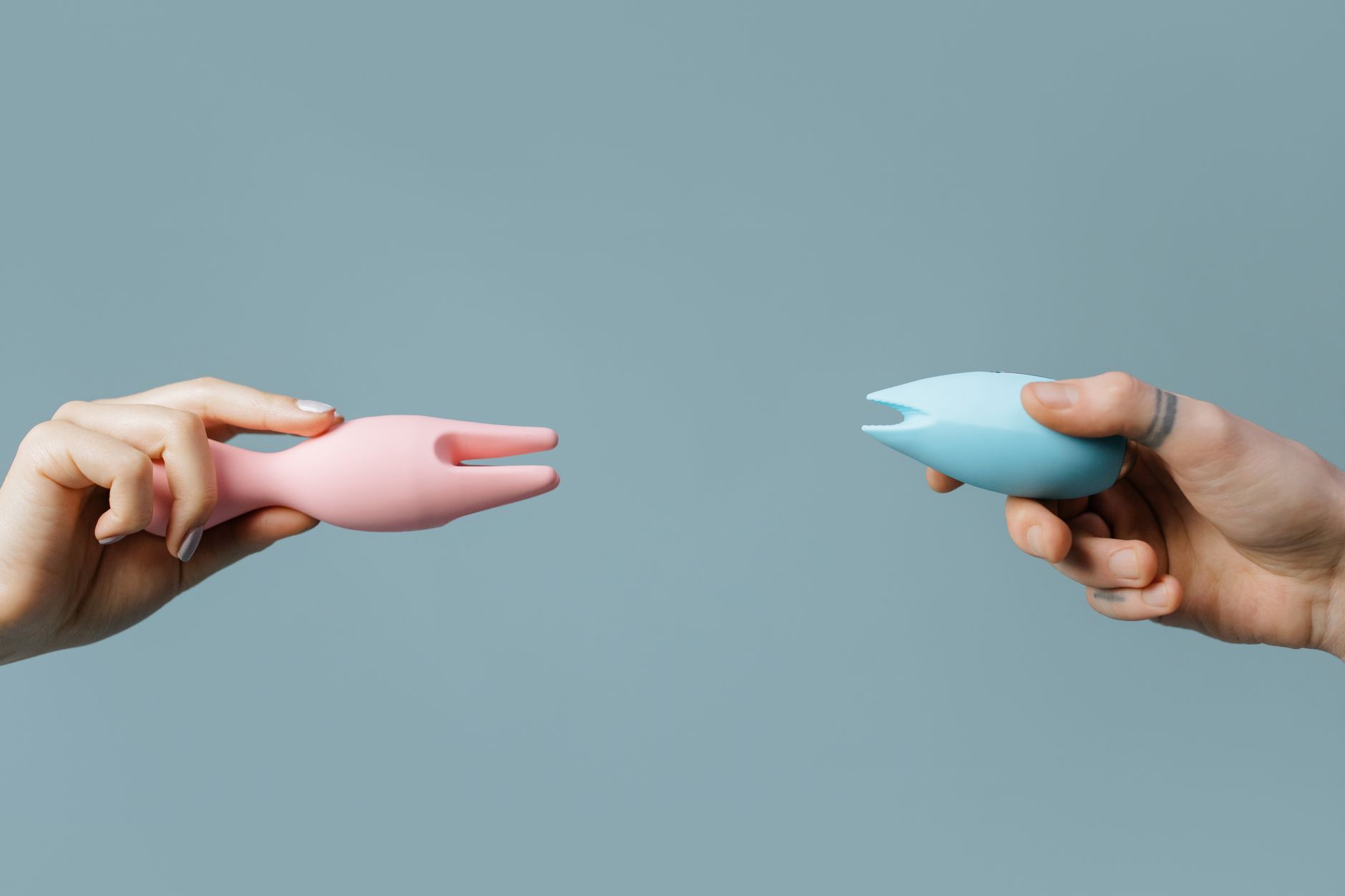
Here's where external stimulation becomes not just helpful but often essential. Lemon clitoral vibrators and suction toys like the ones from Hallo Nancy's Lems don't rely on your brain's arousal system to work. They create direct, intense stimulation that bypasses the serotonin problem entirely.
Traditional vibration can work, sure. But lemon vibrators, with their gentle suction mechanism, activate nerve endings in a way that often feels distinct from what your brain is expecting. When desire is chemically suppressed, this direct physical stimulation can feel genuinely surprising. Many people find that their body responds even when their mind is saying no.
The other advantage: lemon suckers don't require the buildup that ordinary vibrators do. If arousal is hard to access, you might spend 45 minutes trying to get there and still fail. A clitoral suction toy can create sensation and often orgasm in 10 to 15 minutes, which matters when your brain chemistry is working against you.
The pattern that actually helps
I recommend this approach to clients who are on medication that's flattened desire:
Start with zero pressure. You're not trying to get aroused. You're not trying to have an orgasm. You're exploring sensation. Many people find that removing the expectation makes the whole thing less fraught.
Use a lemon clitoral vibrator solo first. Before involving a partner, get comfortable with how your body responds to the toy when there's no one else in the room. This matters because medication-related libido loss often comes with shame, and shame kills sensation faster than anything else. Alone, you can be curious without judgment.
Start on the lowest setting. Medication can also make sensation feel different or uneven. Start at pattern 1 or 2 on a toy like the Lem and notice what you're actually feeling. You might discover that intensity you thought was gone is just waiting for the right kind of touch.
Keep it regular, not spontaneous. Spontaneous desire is one of the first things medication takes. Scheduled intimacy feels clinical, but it removes the pressure of "am I in the mood?" Instead, you're saying "this is the time we explore." That removes the neurological roadblock.
What happens when you introduce a partner to this plan
The conversation with a partner matters enormously. Many people don't tell their partners what's happening. They just withdraw, and the partner assumes rejection or lack of interest. Then resentment builds, and now you've got two problems: medication-related libido loss plus a relationship issue.
The better path is honesty. "My medication is working great for my mental health, and it's also affecting my desire. This isn't about you. Here's what I want to try." Then you involve the toy together, or separately, depending on what feels right.
Some partners are relieved to have a solution. Others feel threatened. That's a different conversation, and it's worth having with honesty. But what I've noticed is that couples who approach this as a shared problem to solve together often end up with better sex than they had before, because they're communicating about desire instead of just hoping it happens.
The medications that are worst, and what to do if you're on one
SSRIs like sertraline, paroxetine, and fluoxetine are the most likely to cause sexual side effects. SNRIs like venlafaxine and duloxetine are second. Bupropion and mirtazapine tend to be gentler on libido, but they don't work for everyone's depression.
If you're on a medication that's killing your sex drive, talk to your prescriber. There are options. Sometimes switching to a different class of antidepressant helps. Sometimes adding a medication like buspirone or bupropion on top of your SSRI can counteract the sexual side effects. Sometimes adjusting timing (taking your dose at night instead of morning) makes a difference.
Don't just accept it as the cost of mental health. It's not. Good prescribers know this is a problem and have solutions.
When a lemon sucker isn't enough
Sometimes medication-related libido loss comes with more than just low desire. Genital sensation might be numb. Orgasm might be delayed or impossible. These are real, documented side effects, and they can be addressed.
If sensation is truly gone, that's a conversation with your doctor about medication adjustment. But if sensation is there and desire is just quiet, lemon vibrators and clitoral suction toys are often the bridge that gets you back to pleasure.
I've also seen people benefit from combining toys with other tools. Long foreplay. Erotic audio or reading. A partner who understands the timeline and isn't pushing for spontaneous arousal. Mental shift from performance to exploration. All of these matter when chemicals are making the traditional pathway harder.

Photo by Ron Lach on Pexels
The conversation nobody's having
Mental health comes first. Always. If an antidepressant is saving your life, that matters more than sex drive. But here's what I need to be clear about: losing your libido to medication doesn't mean you're broken, and it doesn't mean you have to accept it as permanent. Your desire isn't gone. It's just quieter. And external stimulation, like a lemon clitoral vibrator or suction toy, can wake it back up.
There's also real grief in this. Sex was part of your identity. Desire was something you could count on. And then it wasn't. That loss is worth acknowledging. But loss isn't the same as permanent absence. Many people rebuild desire, rebuild pleasure, and find that their relationship survives and even strengthens because they had to be honest about what was happening.
People also ask
How long does it take for antidepressant sexual side effects to go away?
This varies widely. Some people experience improvement after a few weeks of starting medication. For others, sexual side effects persist for months or years. If you're months in and nothing has changed, that's when to loop in your prescriber about adjusting the dose, switching medications, or adding something to counteract the effect. Don't wait longer than three to six months if it's affecting your quality of life. There are solutions.
Can you use a lemon vibrator if you're also taking other medications?
Absolutely. A lemon clitoral vibrator is a tool, not a substance. It works alongside whatever you're taking. The combination of your antidepressant plus a clitoral suction device might actually help your body remember what arousal feels like. Just make sure you're not combining medication types that could interact badly. If you're on anything that affects cardiovascular function, check with your doctor, but toys themselves are safe.
Is it normal to need a toy to have an orgasm on SSRIs?
Completely normal. Medication changes your neurochemistry, and sometimes your body needs more direct, consistent stimulation to reach orgasm. This isn't a long-term failure. Many people find that over time, as they rebuild the neural pathway through repeated stimulation and pleasure, spontaneous orgasm becomes possible again. But even if it doesn't, that's okay. Lemon vibrators exist for exactly this reason.
Can you have a healthy sex life if your medication has lowered your libido?
Yes. Healthy sex isn't about spontaneous desire or frequency. It's about connection, honesty, and pleasure that works for both people. Some of the most satisfying sex lives I see are in couples where one or both partners are on medication that affects desire. They communicate more, they're more intentional, and they often say the sex is better because there's no performance pressure.
Should you tell your partner about medication-related sexual side effects?
Yes. Keeping it secret creates distance, and distance creates more sexual dysfunction. Your partner will notice the change anyway. Better to frame it as "this is a medication side effect, and here's how we work with it together" than to let them assume it's about them. You'll likely find they're relieved to have an explanation and a plan.
Will switching antidepressants fix the problem?
Maybe. Some antidepressants have fewer sexual side effects than others. But switching also means risking your mental health stability while your brain adjusts. It's worth discussing with your prescriber, especially if the sexual side effects are severe. Often, though, there are ways to manage the side effects without switching, which is safer. Talk to your doctor about all the options before making changes.
The truth you need to hear
Your antidepressant is not the problem. Depression is the problem. The medication is the solution. And yes, it has side effects. But those side effects are not a reason to suffer in silence or to give up on pleasure.
Lemon vibrators, clitoral suction devices, honest conversations with partners, and good communication with your prescriber are all part of rebuilding what medication temporarily took. You deserve to feel good mentally and physically. Both are possible. And you don't have to choose between them.
If you're struggling with this, you're not alone. Reach out to your doctor, your therapist, or if you need to talk through relationship dynamics around this shift, get in touch. We can help you find a path forward that honors both your mental health and your pleasure.