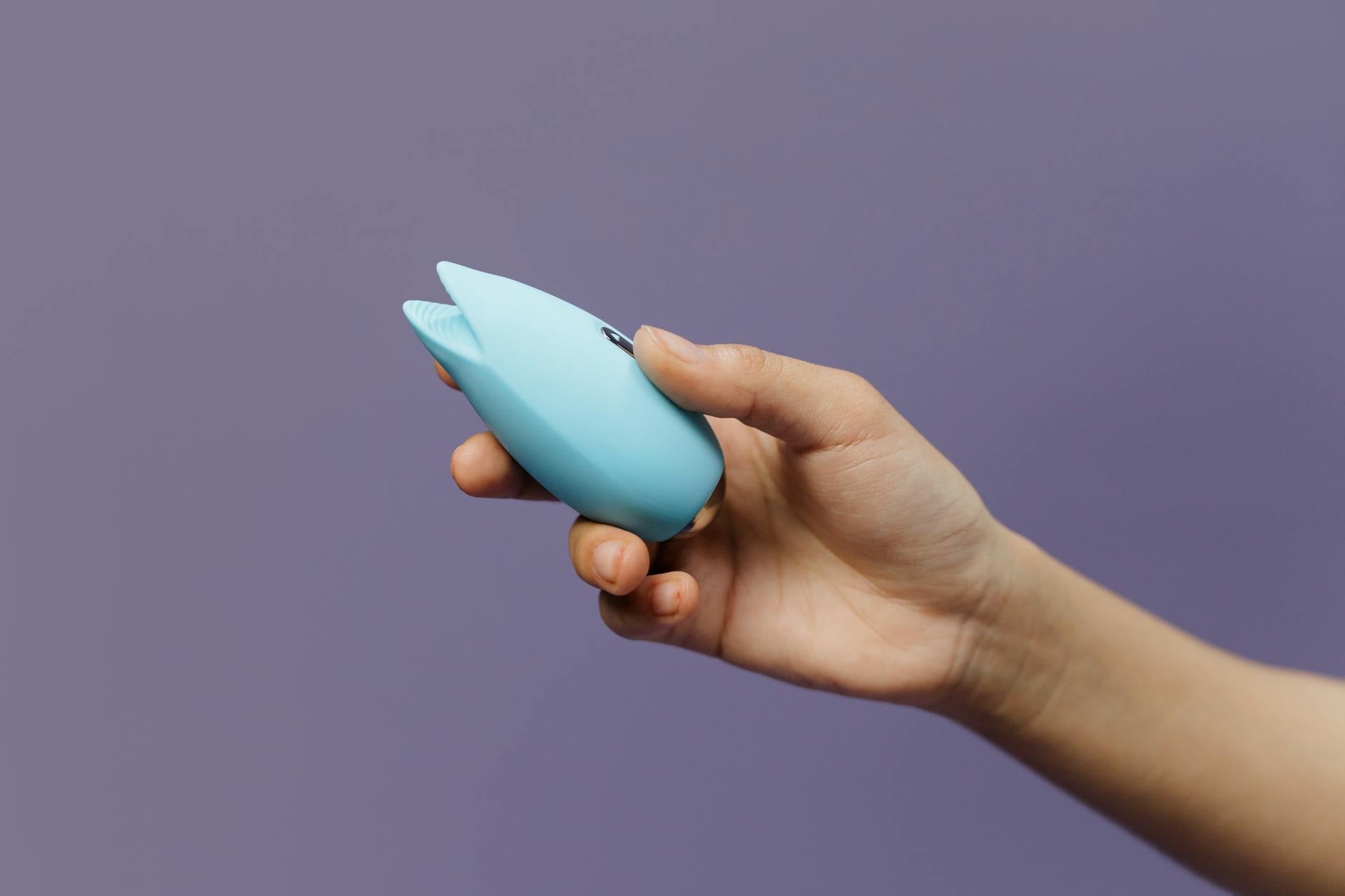
Here's what nobody tells you about vibrator technology
Most vibrators buzz. That's the baseline. They vibrate at a frequency between 40 and 100 hertz, creating a rapid oscillation that stimulates nerve endings through consistent, high-speed friction. It's been the gold standard for decades. But lemon clitoral vibrators do something entirely different: they use air-pulse suction technology instead. The distinction sounds technical, but it changes everything about how pleasure actually feels.
The question isn't which is objectively better. It's which matches the way your body responds to stimulation.
How traditional vibrators actually work
A standard vibrator, whether it's a wand, bullet, or rabbit, operates through a motor that creates rapid vibrations. The stimulation is consistent, direct, and mechanical. Your clitoris has around 8,000 nerve endings concentrated in a small area, so that direct buzz can feel incredibly intense. Many people can reach orgasm quickly with traditional vibrators, which is part of why they've dominated the market for so long.
But there's a catch that a lot of users don't anticipate: the intensity and repetition can actually numb sensation over time. If you've been using the same traditional vibrator for months or years, you might notice that it takes longer to feel pleasure, or the sensation becomes less distinct. This isn't your body breaking down. It's habituation. Your nervous system adapts to the stimulus and requires more intensity to register the same sensation.
Traditional vibrators also rely on direct contact with the clitoris, which can feel overwhelming for people with sensitive tissue or nerve conditions like vulvodynia. The sustained friction, even at lower intensities, can trigger irritation or pain rather than pleasure.
What makes lemon vibrators feel fundamentally different
Lemon clitoral vibrators use air-pulse suction instead of vibration. Picture the sensation more like a gentle rhythmic squeeze or wave of pressure, rather than a constant buzzing motion. The technology creates a seal around the clitoris and uses changing air pressure to stimulate the external and internal parts of the clitoral structure. It's less friction, more gentle pressure. Think of it as a softer, more enveloping kind of stimulation.
This matters because the clitoris isn't just the small external bud you can see. It has internal structures, including the clitoral bulbs that sit on either side of the vaginal opening. Suction technology engages the whole anatomy in a way that direct vibration doesn't. Many people report that orgasms triggered by suction feel differently distributed, more full-bodied, sometimes slower to build but more intense once they arrive.
Because there's less direct friction, lemon vibrators work well for people with sensitive tissue. If traditional vibrators have left you feeling raw or over-stimulated, the gentler suction approach often feels more sustainable. You can use it for longer without discomfort.
The pleasure angle that changes everything
Here's where it gets interesting: because suction feels different, it doesn't trigger the same habituation response as traditional vibration. People who have used standard vibrators for years often report that switching to a lemon clitoral vibrator reawakens sensation. It's not that their body was broken. It's that the sensation was no longer novel, no longer surprising. A different stimulus wakes the nervous system back up.
I've worked with couples and individuals who say that after years of using traditional vibrators, a <a href="/blog/how-to-use-lemon-vibrators-when-your-clitoris-feels-numb-or-desensitized-from-frequent-use">lemon vibrator restored sensation they thought was gone</a>. That's not magic. That's neurology. Your body responds to variety.
The other difference is pacing. Traditional vibrators are "on or off." You choose a setting and the buzz remains constant. Lemon vibrators offer pulse patterns and intensity levels that allow you to build arousal gradually. You can start at a very low setting and let sensation develop. Many people find this slower build actually deepens arousal and makes orgasms feel more integrated with emotional connection rather than purely mechanical release.
When traditional vibrators still make sense
I don't want to oversell lemon vibrators as the replacement for everything. Traditional vibrators are still the faster route to orgasm for many people. If you're someone who knows exactly what gets you there and you like a straightforward, no-fuss approach, there's nothing wrong with that. Speed isn't shallow. Sometimes you want reliable, efficient pleasure.
Traditional vibrators are also smaller and more discreet. If portability or privacy matters, they have an advantage. And for external-only stimulation when you want direct, concentrated sensation, a powerful wand vibrator will always have a role.
The other consideration: cost. Lemon vibrators tend to be priced higher than basic traditional vibrators because the air-pulse technology is more sophisticated. If budget is tight, a solid traditional vibrator is still genuinely good.
The practical comparison: what to expect
Let me walk you through the direct experience differences so you can predict what might work for your body.
Sensation intensity. Traditional vibrators feel sharper, more buzzy, more instantly noticeable. Lemon vibrators feel rounder, more enveloping, sometimes requiring a moment to register. If you like immediate, obvious sensation, traditional vibrators will feel faster. If you prefer sensation that wraps around the clitoris rather than attacking it, lemon vibrators feel more naturally aligned.
Speed to orgasm. Traditional vibrators typically get you there faster. Lemon vibrators often take longer but can feel more layered when you arrive. Neither is better. They're different experiences.
Sustainability. You can use a lemon vibrator for 20, 30, even 45 minutes without numbness or irritation. Traditional vibrators often hit a wall around 15-20 minutes where sensation starts to flatten out. If you like extended sessions, lemon vibrators have a real advantage.
Partner integration. <a href="/blog/how-to-introduce-a-lemon-vibrator-to-your-partner-without-awkward-conversations">Introducing a lemon vibrator to partnered sex feels less clinical</a> to some people because the sensation doesn't feel as "mechanical." Traditional vibrators can feel more goal-oriented. That's subjective, but worth noting.
The science of stimulus novelty
Your nervous system thrives on novelty. The same stimulus, repeated identically over months, registers less and less sharply. This isn't a problem with your body. It's how neurology works. When something feels new, your brain pays more attention. When it's familiar, your brain downshifts.
This is why people who have relied on traditional vibrators for a long time often report a "dead" feeling, as if pleasure became harder to access. Adding variety, whether that's a different vibrator type, a different technique, or a different technology entirely, reactivates attention and sensation. A lemon clitoral vibrator does exactly that because the stimulus is qualitatively different.
Combining both approaches
Honestly, a lot of people who've explored both don't choose one or the other. They use them for different contexts. A traditional vibrator might be the quick-release option when you're short on time. A lemon vibrator becomes the extended, more sensory experience. Or you alternate them every few weeks to keep sensation sharp and varied.
There's no rule that says you have to pick a side. Your pleasure deserves to be multifaceted.
People also ask
Are lemon vibrators better than traditional vibrators?
Not objectively. They're different technologies that stimulate differently. Traditional vibrators create rapid buzzing sensation and tend to be faster and more intense. Lemon vibrators use suction technology that feels rounder and more enveloping. Which is "better" depends entirely on your body, your goals, and what sensation you're drawn to. Many people find they like both for different reasons.
Why does my body respond better to a lemon vibrator than a regular vibrator?
A few reasons could be at play. If you've used traditional vibrators for a long time, your nervous system might be experiencing habituation to that specific stimulus. A lemon clitoral vibrator feels qualitatively different, which can reawaken sensation. You might also have tissue sensitivity that responds better to gentle suction than to direct friction. Or your body might simply be wired to respond more readily to the dispersed pressure of suction rather than localized buzzing. All of these are normal.
Can I use both a lemon vibrator and a traditional vibrator in the same session?
Absolutely. Many people alternate between them to build arousal gradually with one and then reach climax with the other. Some use a lemon vibrator for foreplay or extended sensation and switch to a traditional vibrator when they're ready to orgasm. There's no rule. Listen to what your body wants in the moment.
Do lemon vibrators work if traditional vibrators never worked for me?
Often, yes. If traditional vibrators have felt too intense, painful, or just never quite right, the gentler, more dispersed stimulation of a lemon vibrator might finally click. The technology is fundamentally different enough that bodies that didn't respond to one often find the other much more aligned. It's worth trying if you've been frustrated with traditional options.
How do I know if I should switch from traditional vibrators to a lemon vibrator?
Consider switching if you're experiencing numbness or habituation with your current vibrator, if direct stimulation feels too intense or irritating, if you want longer sessions without discomfort, or if you're simply curious about how a different sensation might feel. You don't have to abandon traditional vibrators. Think of it as adding a tool to your collection.
Is the suction technology in lemon vibrators safe for long-term use?
Yes. Air-pulse suction technology is gentler on tissue than sustained high-intensity vibration. Because there's less direct friction, many people can use lemon vibrators for longer without irritation. Just follow basic care guidelines: clean the device after use, avoid sustained use on irritated tissue, and listen to your body if anything feels uncomfortable.
The real bottom line
You don't have to choose between traditional vibrators and lemon clitoral vibrators. They're different tools for different moments. Traditional vibrators are direct, efficient, and intense. Lemon vibrators are enveloping, sustainable, and often reawaken sensation when other technologies have stopped surprising you.
Your pleasure is too varied to be captured by one single approach. Explore what your body actually responds to, give new sensations time to register, and don't assume that if one technology didn't work, none of them will. Sometimes the right tool just hasn't found you yet.